The Church and Monastery of São Francisco in Faro stand among the city’s most historically layered and architecturally intriguing religious sites. Although less famous than the cathedral in the old town, São Francisco holds a quiet significance that reflects centuries of devotion, destruction, reconstruction and adaptation. Its story is inseparable from the broader history of the Algarve, marked by medieval faith, seismic catastrophes, military use and, ultimately, the preservation efforts that allowed the monument to survive into the present.
The Church and Monastery of São Francisco may lack the grandeur of larger Portuguese monastic complexes, yet its importance lies in precisely that modesty. It is a testament to Faro’s resilience, a monument that endured natural and political upheavals while preserving a quiet but profound relationship with the city’s inhabitants. For visitors, it offers an escape from the more crowded monuments, a chance to reflect on the layers of history that shaped Faro beyond its fortified walls, and an encounter with a spiritual heritage that continues, discreetly but firmly, to define part of the city’s identity.
Origins of the Franciscan Presence in Faro
The origins of the monastery date back to the late Middle Ages, when the Franciscan Order expanded across Portugal, establishing convents in towns where pastoral work and assistance to the poor were most needed. The Franciscans settled in Faro during the fourteenth century, choosing an area just outside the old defensive walls, then still semi-rural, yet close enough to the city’s life and movement. Their simple early buildings would later grow into a complex that included a church, cloister, dormitories, refectories and workspaces, forming a small but important religious centre at the edge of the town.
Architectural Evolution of the Church
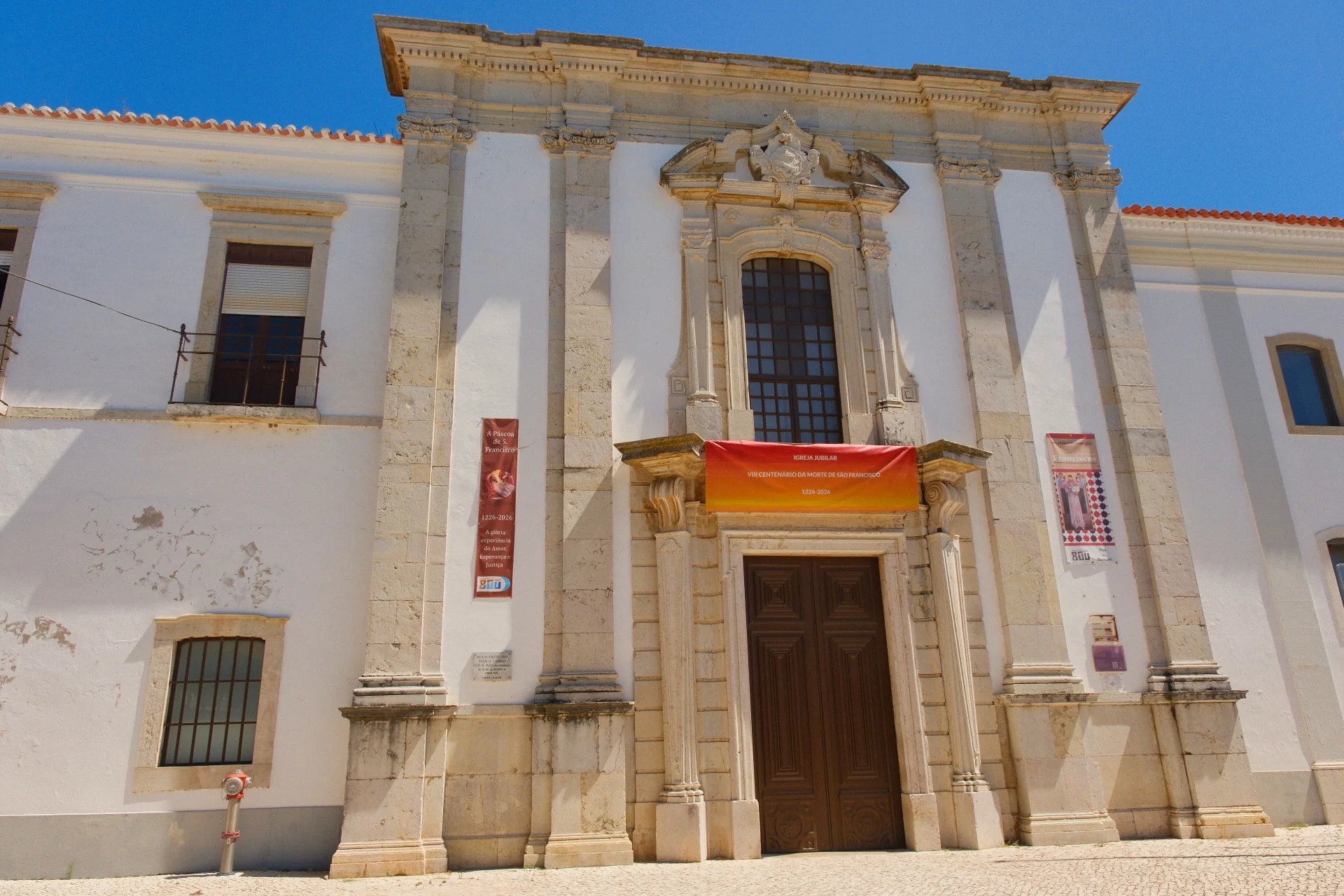
The church, dedicated to Saint Francis of Assisi, followed the architectural logic common to Franciscan buildings: sober, austere and designed to inspire contemplation rather than ostentation. The first known structures were Gothic in character, with pointed arches and a narrow, tall nave. Over time, especially during the sixteenth and seventeenth centuries, the church was progressively adapted and decorated according to the evolving artistic tastes of the period. The addition of chapels, altarpieces and tiles gradually introduced Renaissance, Mannerist and later Baroque elements, transforming a once simple medieval church into a richly layered ensemble.
Life and Influence of the Monastery
The monastery flourished as an active religious community for several centuries. The Franciscans played an important social role in the city, offering charity, hosting travellers and participating in local events. Their church became a place of devotion widely frequented by the population, especially during important feast days. However, the complex would not escape the disasters that repeatedly shaped Faro’s history. The most devastating of these was the 1755 earthquake, which severely damaged much of the Algarve. São Francisco suffered structural destruction, the collapse of sections of the convent and the loss of artistic works. Its reconstruction was slow and required rebuilding significant portions of the church, replacing roofs and consolidating weakened walls. Some of the Baroque and post-Baroque character of today’s building was defined in the decades following the earthquake, as artisans and architects restored the religious space with the styles and materials available at the time.
Nineteenth-Century Transformation and Decline
Like all Portuguese monasteries, São Francisco faced a dramatic turning point in the nineteenth century when the liberal government dissolved the religious orders in 1834. The monks were expelled, and the property was transferred to the state. Without a religious community to maintain it, the convent fell into gradual decline. Some of the buildings were repurposed for administrative or military functions, a common fate for many abandoned monasteries in the country. Over the years, the cloister and monastic wings suffered significant deterioration, and several structures were lost entirely. Only the church remained in active use, sustained by local devotion and periodic repairs.
Interior Highlights and Artistic Features
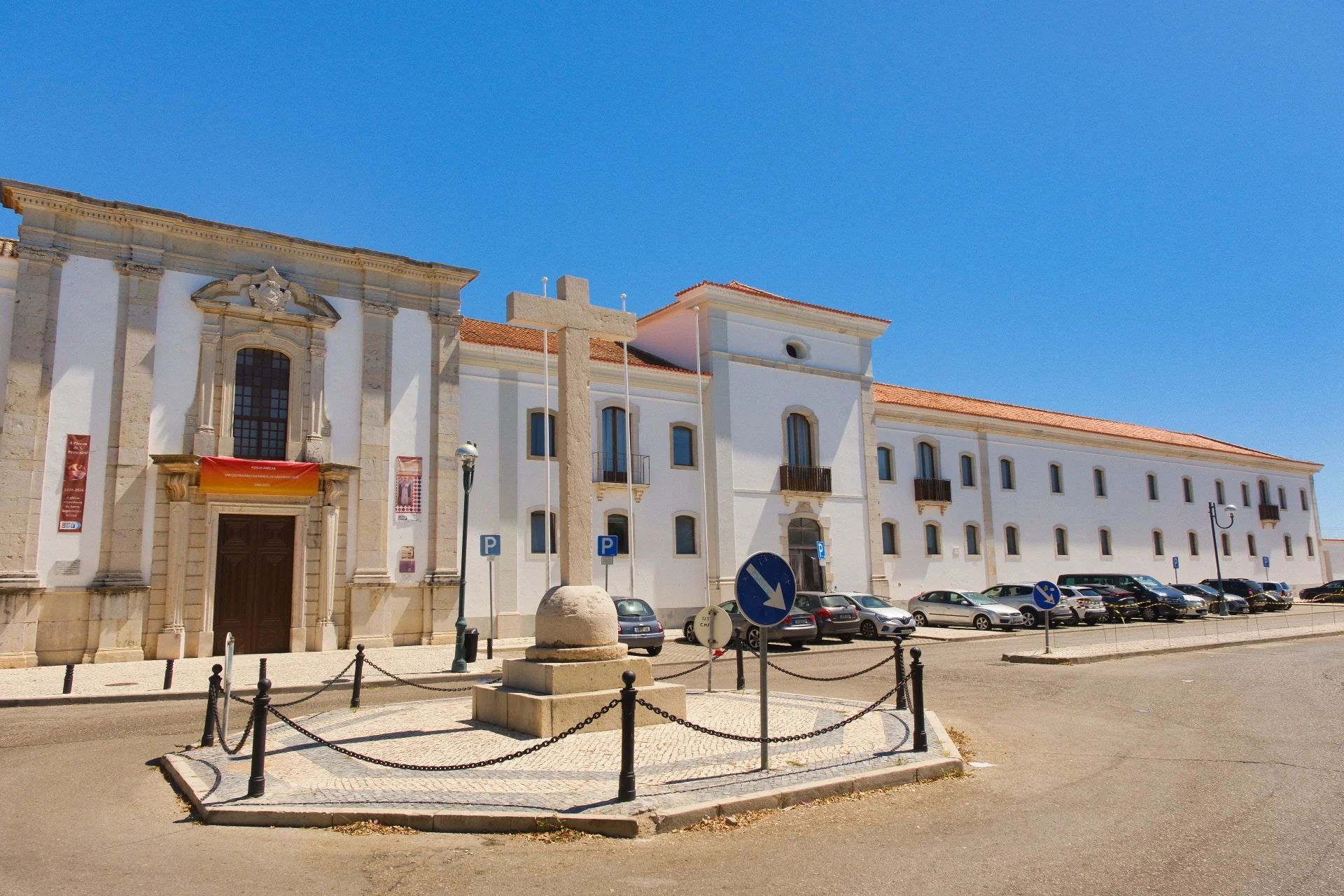
Despite these losses, the church of São Francisco still preserves important historical and artistic features. The exterior, simple and whitewashed, reflects the southern Portuguese aesthetic that prioritizes clarity of form. Inside, the nave houses side chapels with altarpieces in wood and gilding, some of them dating back to the seventeenth and eighteenth centuries. The contrast between the plain walls and the decorative richness of the chapels creates an atmosphere characteristic of Franciscan architecture in Portugal, where sobriety and ornament coexist harmoniously. One of the most notable interior elements is the use of azulejos, the traditional Portuguese tiles that combine narrative, color and geometric motifs. Although not as extensive as in some other monuments, the tiles of São Francisco contribute to an environment that feels both intimate and historically grounded.
Modern Restoration and Preservation
In recent years, the church underwent restoration works that significantly improved its condition and revealed previously obscured details. Conservation efforts focused on structural consolidation, cleaning of altarpieces, tile restoration and improvements to the roof and façade. These interventions, carried out with respect for historical authenticity, brought new life to the monument and strengthened its role as an important heritage site in Faro. The monastery ruins, still visible in parts, were stabilized but not reconstructed, allowing visitors to sense the lost scale of the original complex.
A Quiet Heritage Site in Modern Faro
Today, São Francisco is both a place of worship and a historical landmark visited by those interested in Faro’s lesser-known heritage. It stands in a peaceful residential area near the modern Largo de São Francisco, not far from the old town yet detached from the main tourist routes. This gives the site a quiet charm: visitors often find themselves exploring the church in near silence, surrounded by the weight of centuries of monastic life and the resilience of a monument that has survived disaster, abandonment and time.
Context Within the City
The surrounding area also deserves mention. The nearby square, which today serves as one of the main parking areas for people visiting the old town, occupies what was once part of the monastery’s lands. From there, it is a short walk to other important sites, such as the Archaeological Museum, the old city walls and the cathedral. Yet despite its proximity to Faro’s busiest historical spots, the Church of São Francisco retains a sense of separation, as though the monastic spirit of retreat and contemplation never completely disappeared.
Visiting Information
Visiting the church is straightforward. It generally follows the schedule of parish churches, opening for morning and late afternoon masses and closing at midday, though times may vary. The interior can be visited freely outside mass hours when the doors are open, though it is always advisable to check the latest timetable. Photography is usually allowed, but discretion is recommended, particularly when services are taking place. As the remaining monastic structures are mostly ruins and not prepared for public access, the visit focuses primarily on the church itself.