A Corner of Faro Built by the People of the Sea
Most visitors to Faro head straight for the Arco da Vila and the walled old town, and few notice a modest two-storey building on a corner of the São Pedro neighbourhood. It is the Casa do Compromisso Marítimo, and it tells a story that reaches back to the Middle Ages: how the fishermen and sailors of Faro organised themselves, looked after their families and shaped the city’s identity.
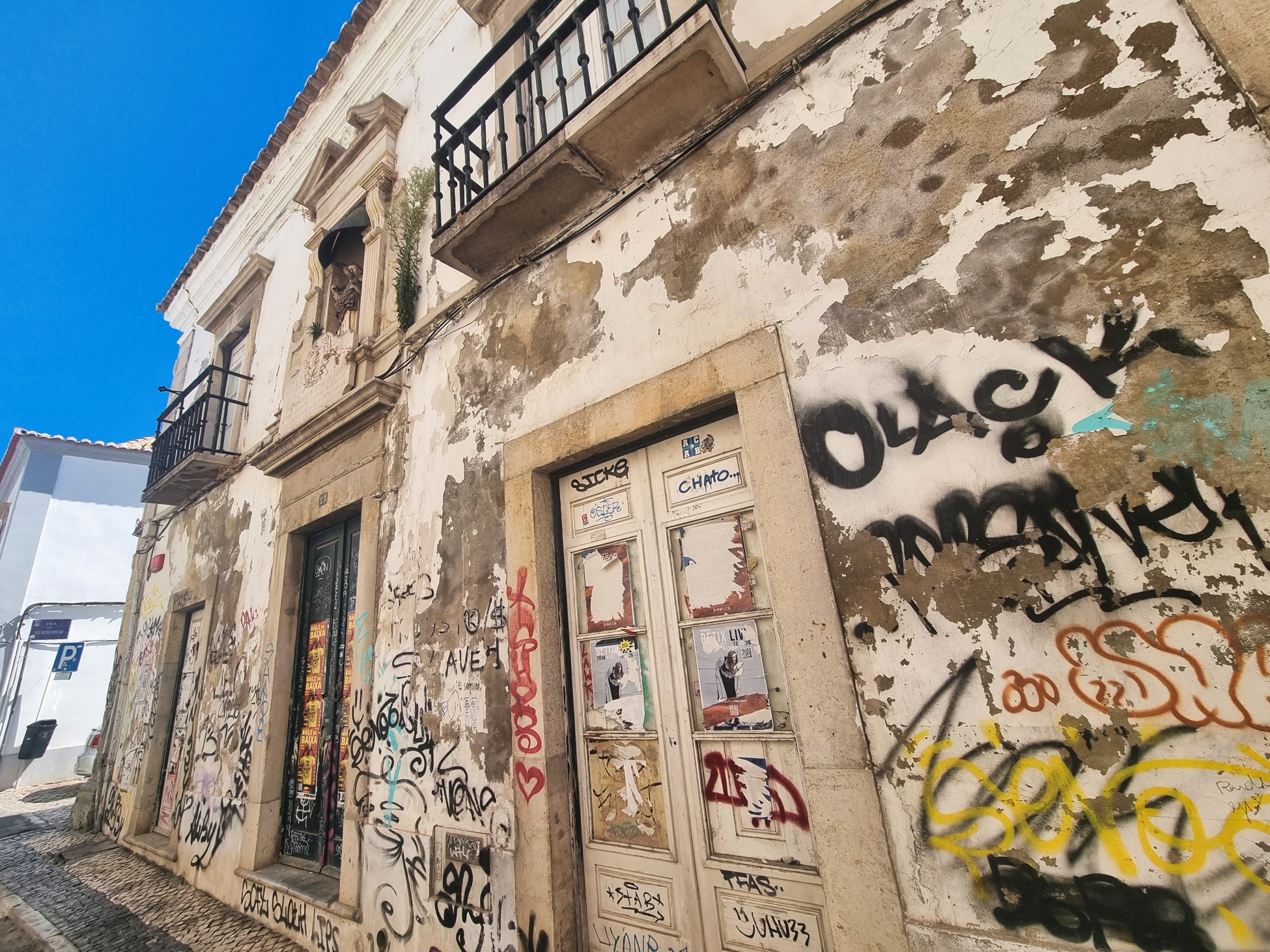
The building stands at the corner of Rua de São Pedro and Rua do Compromisso Marítimo. The side street was once called Rua do Zambujeiro, and its current name comes directly from this house.
What Is a “Compromisso Marítimo”?
The word compromisso here means the written statutes a group of people bound themselves to follow. Maritime compromissos were associations of laypeople who freely agreed to follow written rules, and their main purpose was mutual medical, financial and religious aid for seafarers and their families.
They worked as a kind of medieval mutual-aid society. Besides religious devotion, these brotherhoods (also called confrarias of the Corpo Santo) defended the professional interests of their members and guaranteed families a doctor, a surgeon, a bloodletter, a pharmacy and financial help in sickness, old age or poverty, funded by contributions from members’ earnings. It is an early form of health insurance and pension fund, run by fishermen and sailors themselves.
The History of Casa do Compromisso Marítimo Faro
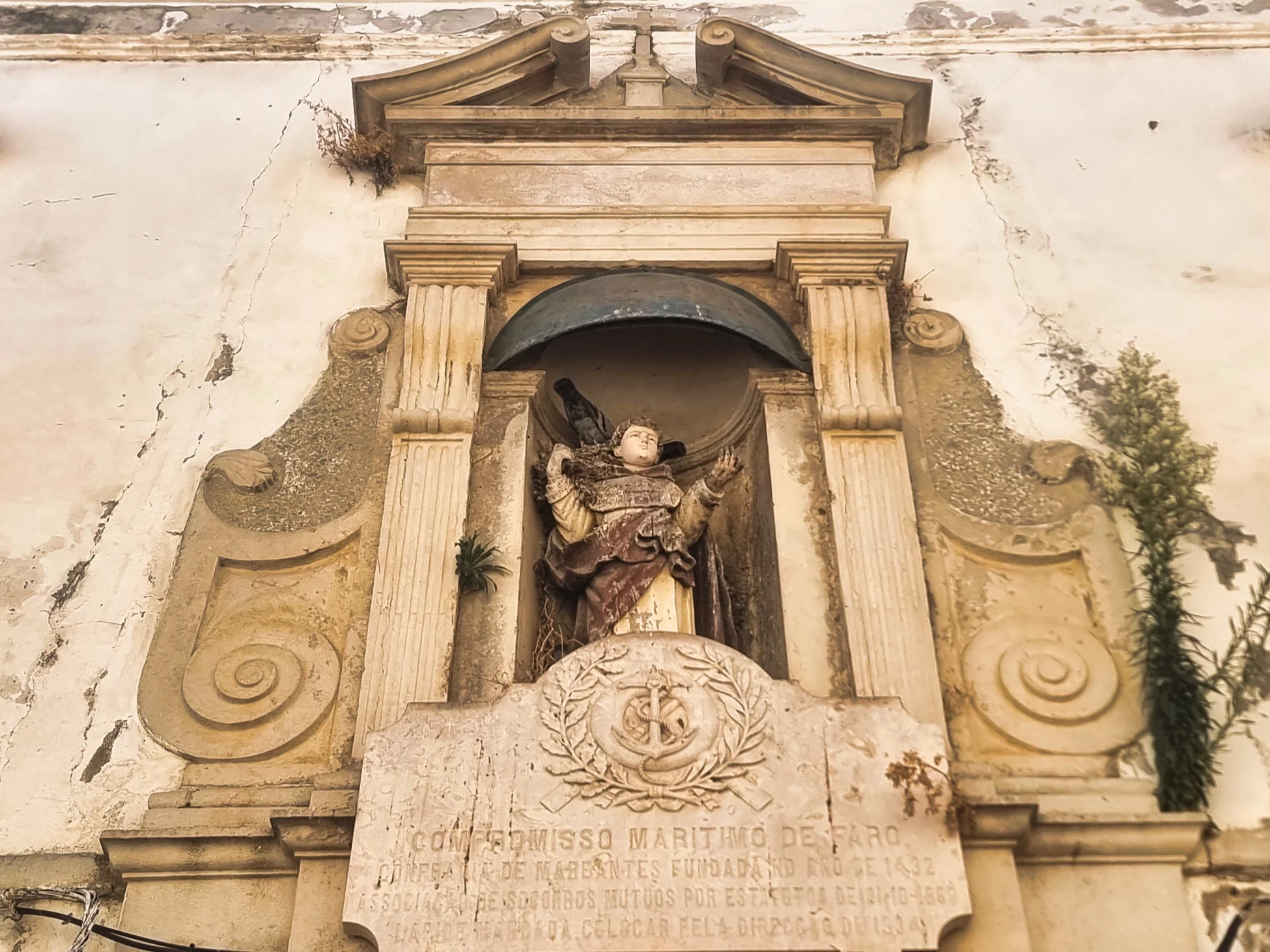
Faro’s brotherhood is among the oldest of its kind in the country. The Confraria do Corpo Santo dos Mareantes de Faro, also known as the Compromisso Marítimo de Faro, has surviving documents going back to 1392.
Its statutes also travelled. Tavira’s compromisso of 1530 was in practice a copy of the Faro mariners’ compromisso of 1529. That same Tavira text is explicit about Sundays: it forbade fishing with any kind of net on Sundays and feast days, on pain of losing the catch to the brotherhood. Since it was modelled on Faro’s, it gives a glimpse of the rules the city’s fishermen lived under, though I can’t say which clauses were identical.
The House of 1709
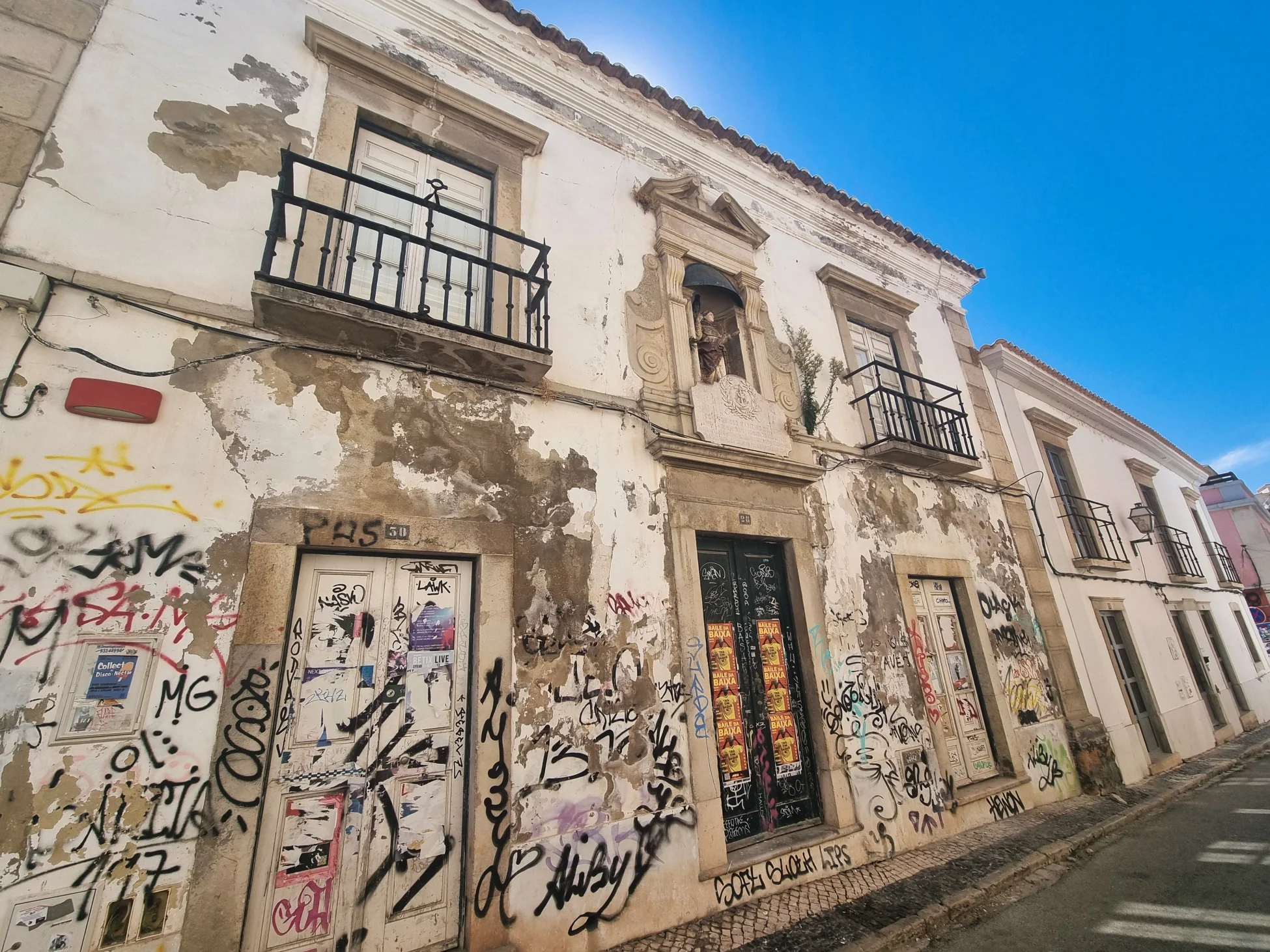
The house you can see today is an eighteenth-century rebuilding. In 1709 the Corporação dos Marítimos Portugueses had the old medieval house rebuilt by Inácio Mendes, giving it features close to arquitetura chã. A local source adds that Mendes was one of the most respected master masons in the Algarve at the time.
Arquitetura chã, or “plain architecture”, is the sober Portuguese style of the seventeenth and eighteenth centuries. It favours classical geometry, compact volumes and rectangular blocks that give buildings an almost fortified look. The Faro building has two storeys, a rectangular plan and balcony windows on the upper floor. It is not showy, but its proportions and restraint are exactly what the style aims for.
Reading the Façades
Look carefully at the outside. The main façade, on Rua de São Pedro, has a niche holding an image of the patron saint, São Pedro Gonçalves Telmo. He is also known as Saint Elmo or Santelmo, and he was the patron of seamen and boatmen. His presence on the street front announced who the building belonged to.
The side façade adds a practical detail. On Rua do Compromisso Marítimo, the ground floor has two arches that belonged to the açougue, the place where animals were slaughtered and meat sold. So the house was also part of the daily commercial life of the quarter, not only a meeting place for the brotherhood.
Painted Ceilings and a Patron Saint
The interior is where the brotherhood’s devotion shows most clearly. Several coffered ceilings survive, and the most significant one depicts the patron saint of seafarers with arms outstretched, a torch in his right hand and a small boat in his left. The saint is also painted in oil on the ceiling of the old meeting room. Another room’s ceiling shows the royal coat of arms, the letters A.S.M.C.M. (Associação Socorros Mútuos do Compromisso Marítimo) and a ship.
Those initials show how long the institution lasted. It began as a medieval brotherhood and continued into the modern era under the name of a mutual-aid association.
The Brotherhood’s Chapel in the Igreja de São Pedro
To follow the story fully, you have to visit the parish church of São Pedro nearby. As in other parish churches, side chapels were assigned to brotherhoods, and in São Pedro the Chapel of Nossa Senhora da Vitória was the responsibility of the Corpo Santo. On 18 April 1758 its leaders contracted the Faro woodcarver António Ferreira de Araújo to make the altarpiece, and the images of Nossa Senhora da Vitória, São Vicente and São Pedro Gonçalves Telmo were moved there once it was finished. The result is considered one of the finest Rococo ensembles in the city.
The house and the chapel work as a pair: the first was the brotherhood’s administrative and social home, the second its place of worship.
A Sister Building in Olhão
Faro was not alone. The Casa do Compromisso Marítimo in Olhão has an architectural and floor-plan structure identical to Faro’s. If you are exploring the eastern Algarve, seeing both gives a good sense of how the region’s maritime communities organised themselves and how similar their institutions were.
Visiting Today
The house is best appreciated from the street, and that comes with a caveat on access. The municipal website lists it as currently closed, so plan to admire the exterior rather than go inside. Its use has changed over time: one source calls it the present-day Casa dos Pescadores, while a 2022 neighbourhood-association post states that the building belongs to the regional Social Security centre. That same association has campaigned for the building to be properly cared for, which shows how much local residents value it.
One practical point: a holiday rental called “Casa do Compromisso” also operates in the same area, and it appears in accommodation listings. It is a separate thing from the historic seafarers’ house.
Why Does It Deserves a Stop
The Casa do Compromisso Marítimo is not a monument to tick off a list. It shows a side of Faro that the postcard views leave out: a working port city whose fishermen and sailors built their own safety net centuries before the modern welfare state. Pause at the corner of Rua de São Pedro, look up at the saint in his niche, trace the two old arches on the side street, and then walk to the church to see the chapel the brotherhood paid for. Together they make one of the more meaningful short walks in the historic centre.