
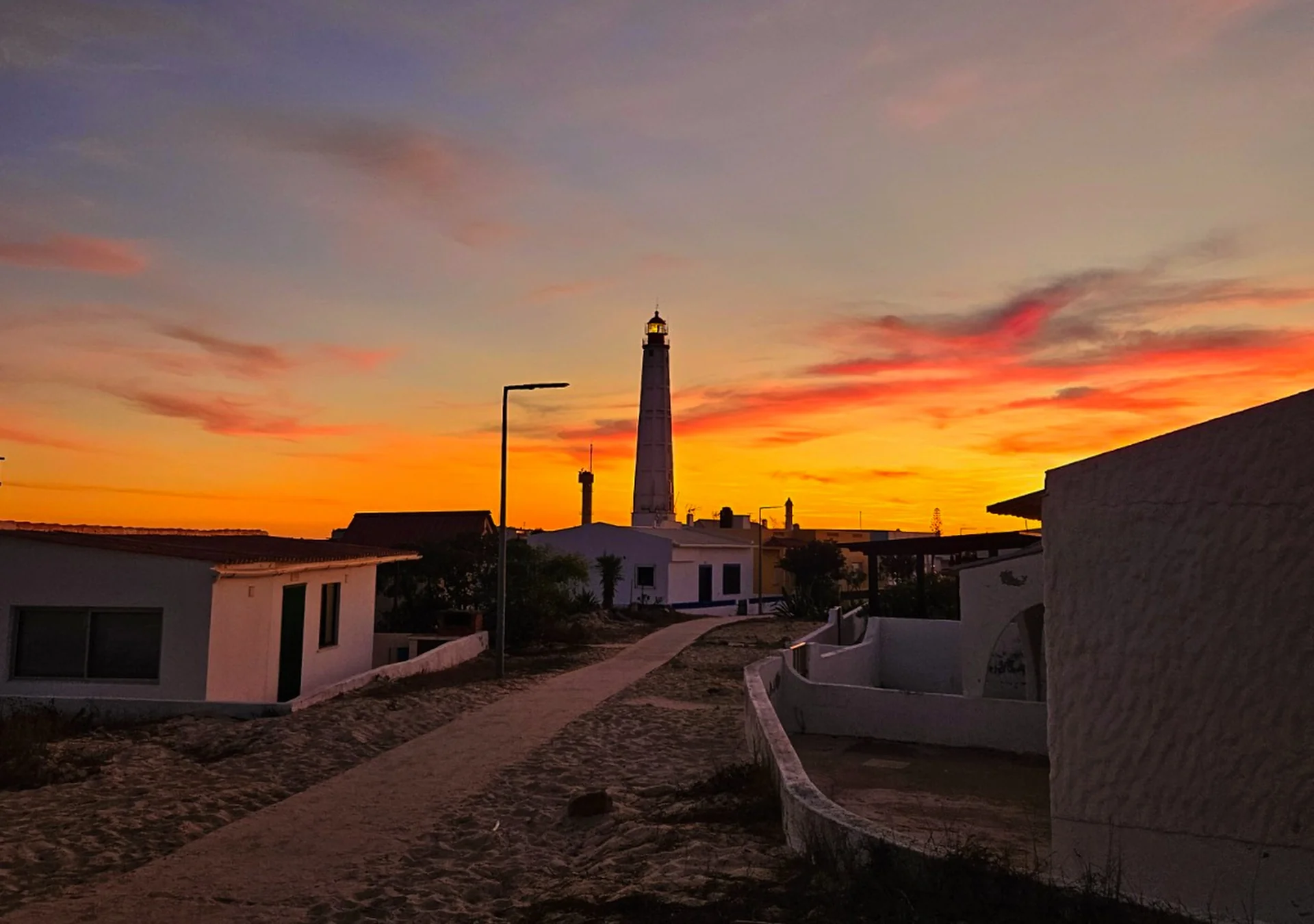
Faro has a surprising secret. Just a short boat ride from the city’s marina, beyond the lagoon of the Ria Formosa, a thin strip of sand holds the southernmost village of mainland Portugal: a car-free settlement with a lighthouse, a long Atlantic beach and a pace of life set by the ferry timetable. This is Ilha do Farol, on Culatra Island, and it is one of the most rewarding day trips you can make from Faro.
The island and the lighthouse
Farol is not an island of its own, strictly speaking. It is the eastern settlement of the Ilha da Culatra, one of the barrier islands that shield the Ria Formosa lagoon from the open sea. Culatra has two communities: the village of Culatra itself and the smaller, more compact Farol, named after the lighthouse that dominates it. Farol is also the southernmost village of mainland Portugal.
The lighthouse is the first thing you notice as the ferry approaches, a tall white tower rising from flat sand and low houses. It can be visited, and this page has all the details. A short walk from the village, a pier extends toward the Barra Nova inlet, the channel through which boats enter and leave the lagoon. It is a fine spot to watch boats pass through.
The Village
The settlement developed around the maritime activities that have sustained communities along this stretch of the Algarve for generations. Fishing has long been central to local life, shaping both the economy and the character of the village. The houses, modest buildings and small pathways reflect a community historically accustomed to living with the particular challenges of an island environment, where the weather, tides and availability of transport can influence even the simplest daily routi
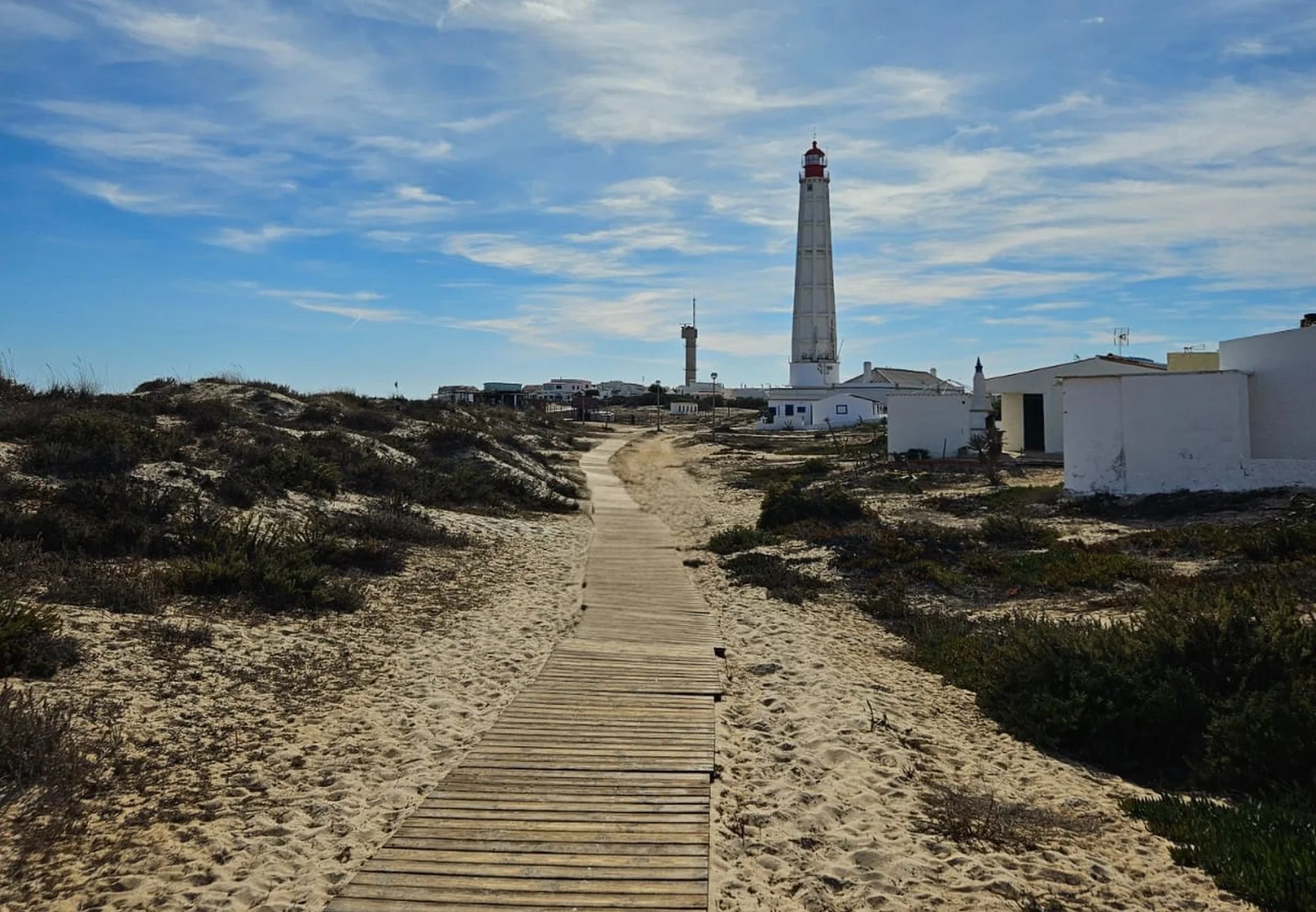
Farol feels removed from the mainland, and that is the point. There are no roads, only sandy lanes and wooden boardwalks threading between low, whitewashed houses. You will find a handful of small shops, cafés and restaurants, many of them open mainly in the warmer months. Seafood and grilled fish are the obvious choices, and a long lunch is the main event of the day. Dishes arrive without hurry, so settle in.
The geography of the village is perhaps its most defining feature. On one side lies the lagoon, with its sheltered waters and constantly changing channels. On the other stretches the Atlantic beach, exposed to the wind and waves. Between these two environments, Farol occupies a narrow strip of land whose appearance and character are shaped by the movement of sand and water.
Keep an eye out for the buildings that give the village its character. The ISN building is the most interesting of them, and worth a look as you wander between the quay and the beach.
Ilha do Farol: the beach
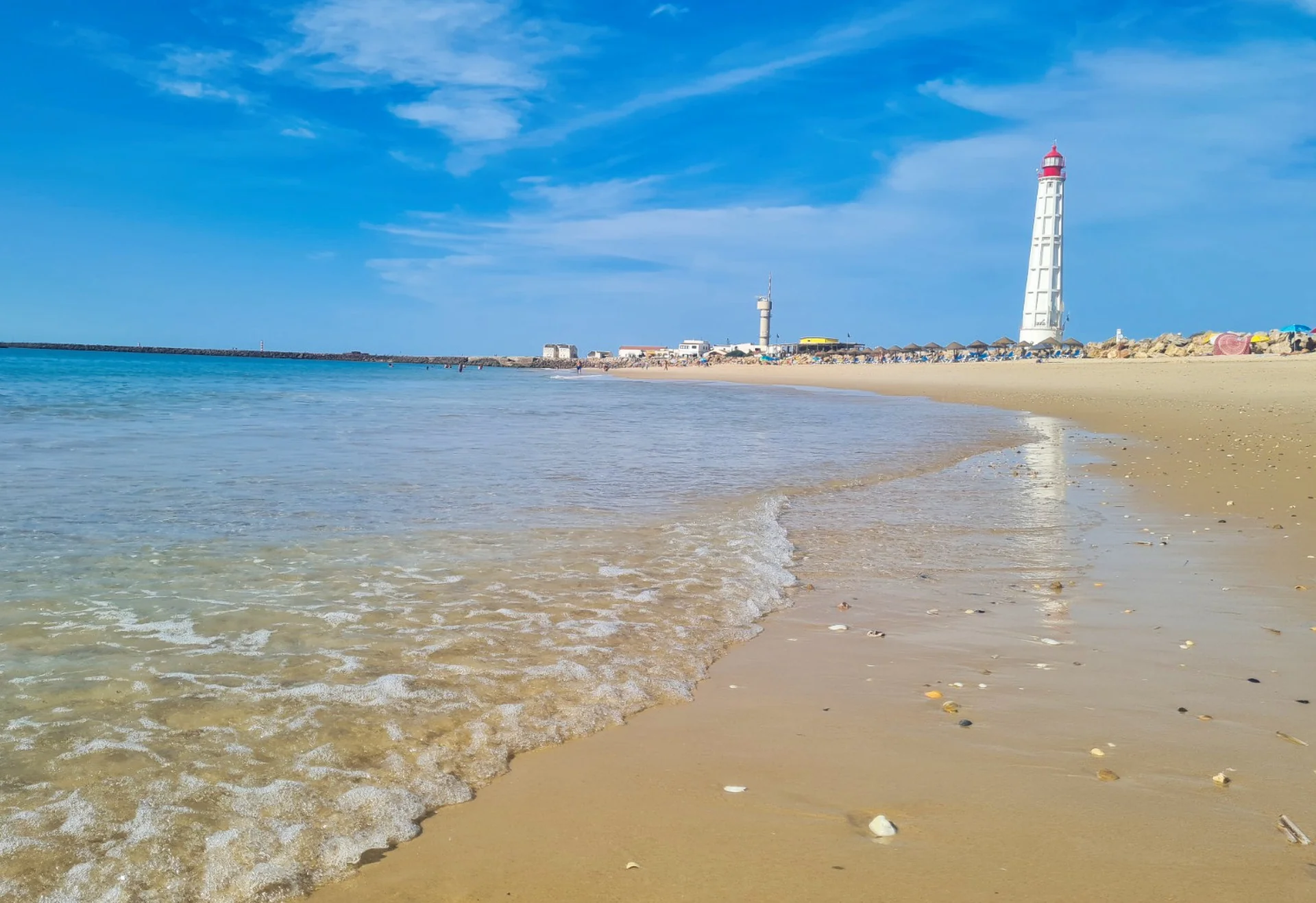
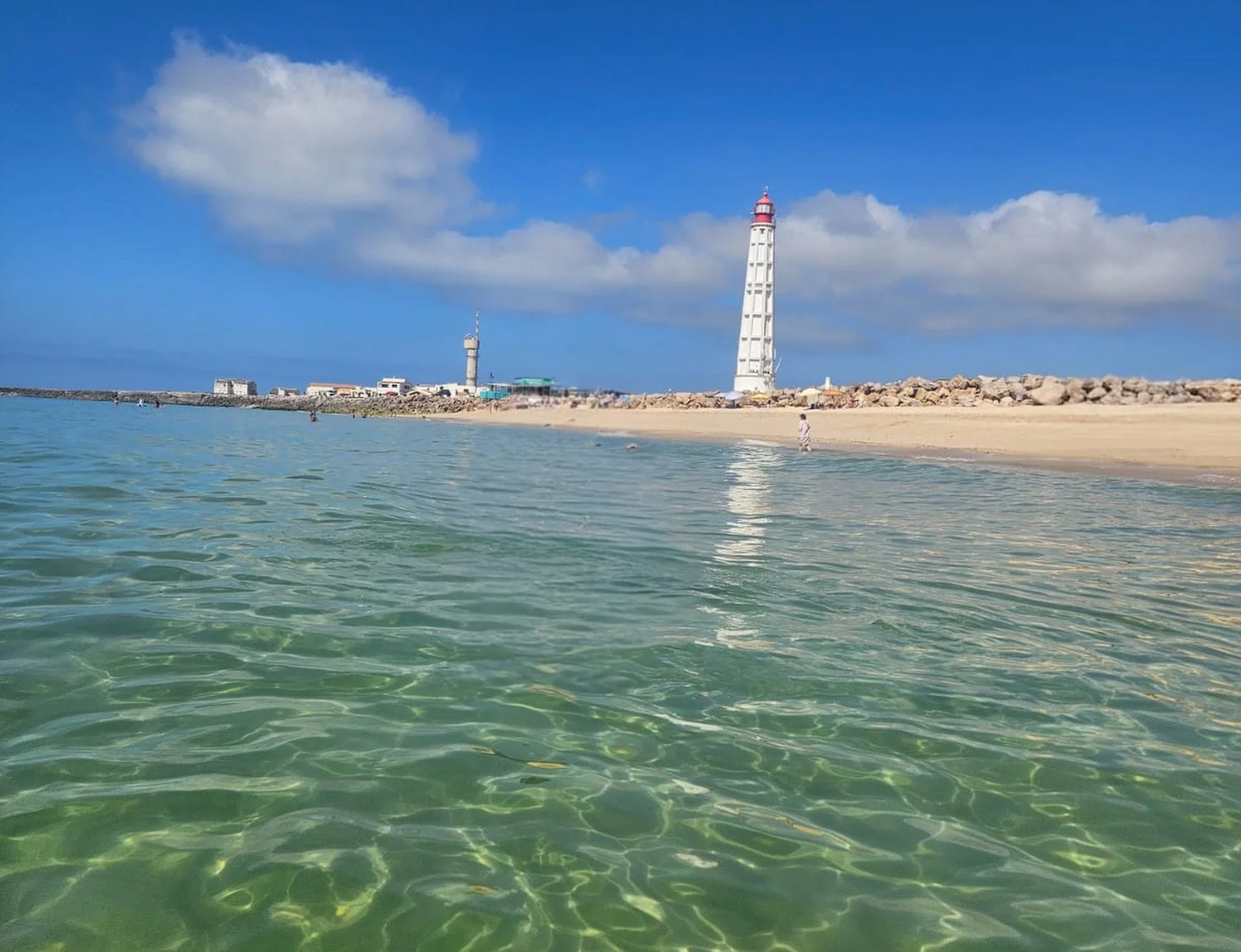
Cross the village on foot and you reach the Atlantic side, where Praia do Farol stretches out in a long ribbon of pale sand. Compared with the busier beaches of the central Algarve, it feels open and uncrowded. In summer, lifeguards watch over the main stretch near the village.
Conditions are real Atlantic ones. The sea can be cooler and livelier than in the lagoon but it’s usually warmer than anywhere in Algarve coast, and the sun is strong with very little shade, so bring a hat, sunscreen and water. The beach bars and simple facilities are near the village, but the further you walk along the sand, the quieter it gets. In the shoulder seasons, you may have long stretches entirely to yourself.
The atmosphere
What sets Farol apart is how little it tries to impress. There are no resorts, no nightlife strip and no souvenir avenues. The mood is slow and unhurried. During the day, boats bring visitors from the mainland, and the village fills with sunbathers, walkers and diners. Once the last ferry has left, a calm settles over the place.
It is a place for people who want to disconnect: read a book, wander the boardwalks, swim, eat well and head home with sand in your shoes. If you want entertainment and bustle, stay on the mainland.
How to get to Ilha do Farol from Faro
The only way to reach Farol is by boat. From Faro, ferries leave from the Cais das Portas do Mar, close to the old town. In the summer timetable, boats to Ilha do Farol depart Faro at 8:30, 10:35, 12:25, 14:45, 16:45 and 18:45, while return boats leave the island at 9:20, 11:20, 13:10, 16:05, 18:00 and 19:30. There is also a separate, much less frequent service to Culatra village, which has just two departures from Faro, at 8:30 and 14:45. postalpostal
The crossing from Faro takes around 40 minutes, a slow and scenic ride through the channels of the lagoon. Ferries also serve the islands from Olhão, and it is worth checking their current schedule if you are coming from that side.
A few practical notes
- Timetables change by season. The schedule above is the summer one, and the last boat of the day in each direction only runs until the end of August. In autumn and winter, services are reduced, so check current times with Faro Municipality or at the quay before you plan the day.
- Do not miss the last boat back. If you do, your only way off the island is a water taxi, and it will cost you a good amount of money.
- Travel light. There are no cars to carry your luggage, so a small backpack is much more comfortable than a suitcase.
Where to stay in Ilha do Farol
There are no hotels or guesthouses on Farol. The only way to sleep on the island is to rent a house, and these are hard to find online, so do not count on a quick search turning one up. For most visitors, the practical solution is to make Farol a day trip from the mainland. Faro is the obvious base, with the ferry quay within walking distance of the old town and the marina area. Olhão is the alternative if you prefer to approach the islands from the east. Either way, plan your day around the ferry times and be on the quay in good time for the last boat back.
Is it worth it?
Yes, especially if you enjoy places that feel unpolished and removed from the usual Algarve routine. Farol is not about monuments or checklists. It is about sand underfoot, salt in the air, a long lunch and a lighthouse watching over it all.
For travellers interested in the less conventional corners of Portugal, Farol offers an opportunity to experience a settlement whose identity is inseparable from its physical surroundings. It is neither a traditional inland village nor a purpose-built holiday resort, but a place shaped by fishing, the lagoon and the Atlantic, where the relationship between human habitation and the natural environment remains unusually visible.
Go early in the day, take your time and keep an eye on the clock for the last boat.