
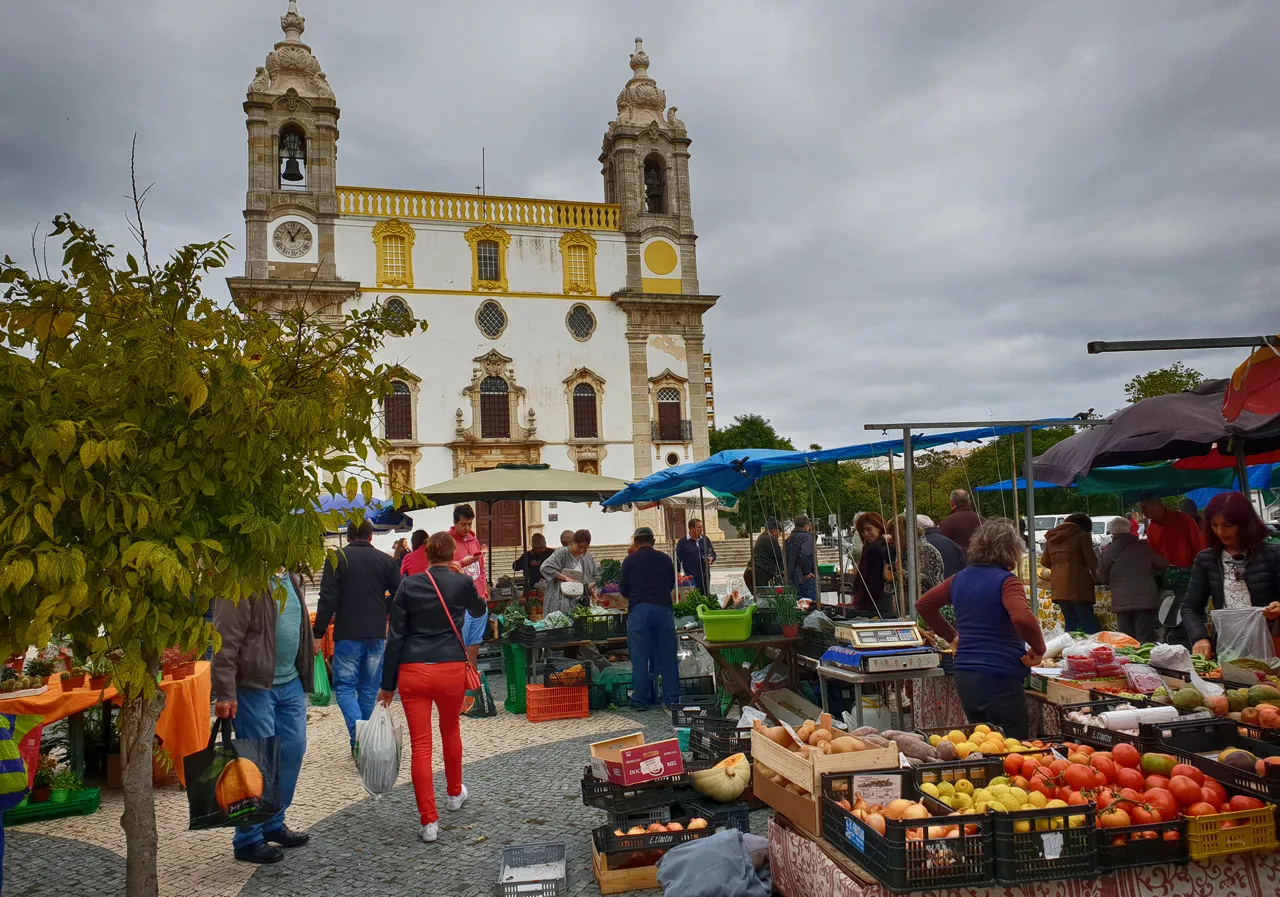
Every Sunday morning, Faro awakens to a ritual that blends tradition, community, and local flavors: the weekly farmer’s market at Largo do Carmo. Located in front of the striking Igreja do Carmo, one of Faro’s most iconic landmarks, this open-air market is more than just a place to buy vegetables and fruit. It is a cultural gathering spot where locals exchange stories, enjoy the rhythm of life, and maintain a direct connection with the land and the people who cultivate it.
The square itself is a fitting stage for this weekly event. With the twin bell towers of the Carmo church rising above and the whitewashed façades surrounding the space, Largo do Carmo feels like an intimate yet vibrant piazza, where the history of Faro meets the immediacy of everyday life. The cobbled stones, shaded corners, and nearby cafés give the market a warm, communal atmosphere.
Roots in Local Tradition
Faro’s markets are deeply rooted in the Algarve’s agrarian traditions. For centuries, farmers from the surrounding countryside have made their way into town to sell their produce directly to consumers. This practice not only provided income but also reinforced the bond between the city and its rural hinterland. At Largo do Carmo, the continuity of this tradition is especially visible. Many of the stalls are run by small-scale farmers or even elderly villagers who bring what they have cultivated with their own hands.
Unlike supermarkets, where produce often comes in plastic packaging and travels long distances, the market emphasizes freshness and seasonality. Tomatoes in summer, citrus fruits in winter, figs and almonds in early autumn—the rhythm of what is available follows the natural cycle of the Algarve. For locals, shopping here is not only economical but also a way of eating in harmony with the seasons.
What You Will Find
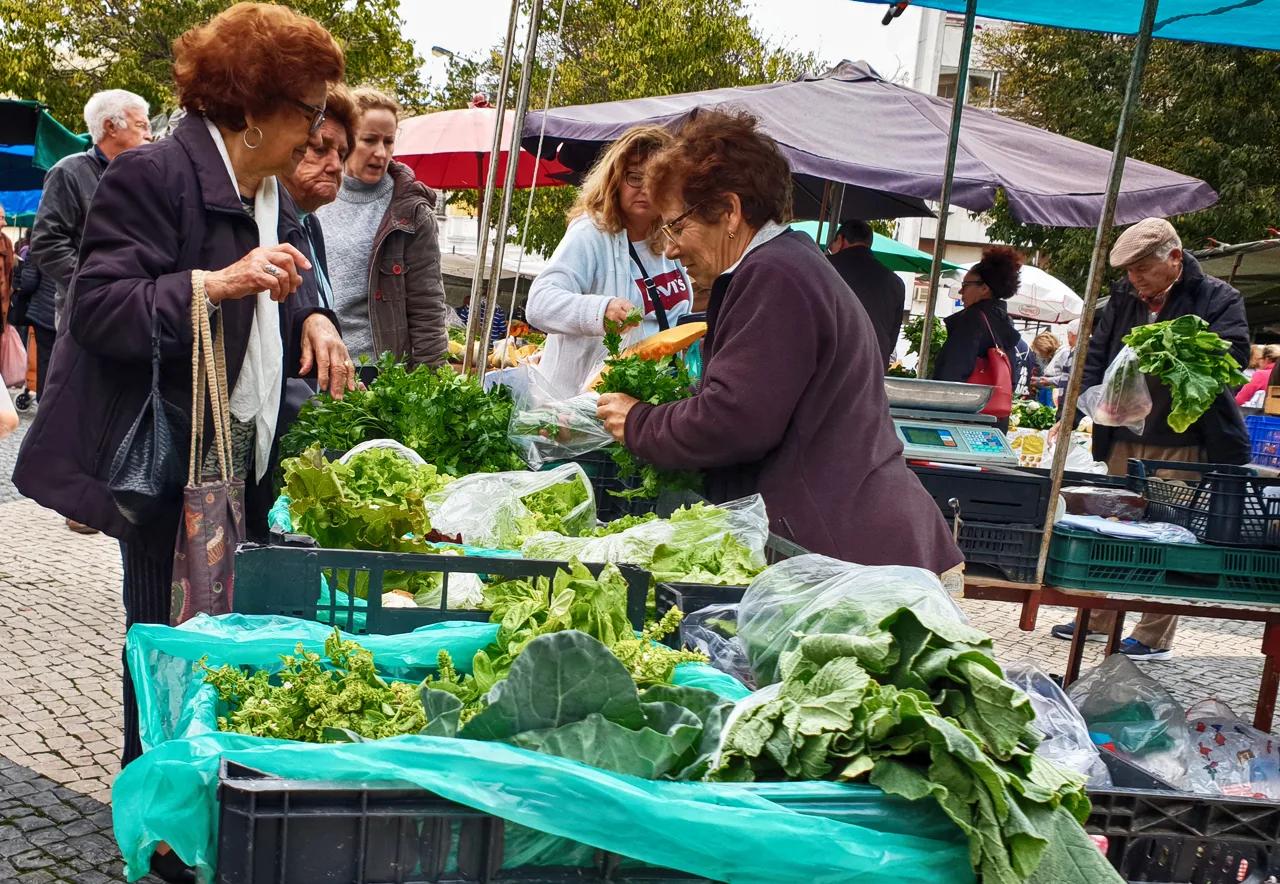
Arriving early in the morning, usually between 8 and 9 a.m., visitors encounter a colorful scene: rows of stalls covered with striped awnings or simple umbrellas, baskets of fruit piled high, bunches of herbs giving off fresh aromas, and freshly harvested vegetables that still carry the scent of the soil. Tomatoes, onions, garlic, peppers, and leafy greens dominate the tables, but seasonal specialties like persimmons, pomegranates, or loquats add a surprise element throughout the year.
It is not just fruit and vegetables. Honey from the Algarve hills, homemade jams, dried figs stuffed with almonds, and traditional cheeses—particularly fresh goat cheese—often find their place at the market. Olives, either plain or seasoned, are sold in large jars, while small bottles of olive oil from family groves are offered directly by their producers. Herbs like oregano, thyme, and rosemary are sold in small bundles, often collected by hand in the countryside. The authenticity of these products sets the market apart: what is on offer here is not a commercial display but a genuine reflection of the Algarve’s rural life.
Atmosphere and Social Life
The Sunday market is also a social ritual. Many locals visit not only to shop but to meet acquaintances, exchange recipes, and engage in conversation. Elderly women wearing aprons discuss the weather with their neighbors, men carrying small plastic bags stop to chat in the middle of the square, and children run between the stalls while their parents compare prices.
There is a gentle rhythm to the morning. By 11 a.m., the square is at its busiest, and a sense of festivity fills the air. Some people combine their shopping with a stop at one of the nearby cafés, where they sip a bica (espresso) while watching the bustle from a shaded terrace. Others attend Sunday Mass at the Carmo church and then cross the square to do their shopping. The two activities—religious observance and market errands—have long coexisted, reinforcing Largo do Carmo’s role as the heart of the neighborhood.
The Setting: Largo do Carmo and Its Church
Part of the market’s appeal lies in its setting. The Igreja do Carmo, built in the early 18th century, dominates the square with its baroque façade and symmetrical towers. Behind it lies the famous Chapel of Bones, a small but striking space decorated with the bones of Carmelite monks, symbolizing the transience of life. For visitors who come for the market, the church provides a historical backdrop that elevates the experience. The market thus becomes more than a commercial exchange; it feels like participating in a living tradition framed by centuries of history.
A Market That Reflects Faro’s Identity
The market is small compared to the larger municipal markets or the bustling Mercado de Loulé, yet its intimacy is its greatest strength. It feels personal, direct, and unpretentious. The lack of commercial polish is part of its charm: here, the vegetables are not perfectly uniform, the herbs may still carry a trace of earth, and the producers themselves are often the sellers. The direct encounter between producer and consumer is an echo of Faro’s slower, more authentic rhythms of life, distinct from the faster pace of the Algarve’s tourist resorts.
For visitors, it is also a chance to see Faro from a local perspective. Away from the marina and the Old Town walls, the Sunday market shows a side of the city where people gather not for entertainment but for daily needs. It is Faro at its most genuine.
Practical Information
The Sunday farmer’s market at Largo do Carmo takes place every Sunday morning, usually beginning around 8 a.m. and winding down by noon. The earlier one arrives, the fresher and more abundant the produce will be. Entrance is free, and the square is within walking distance of Faro’s historic center. For those coming from outside the city, Largo do Carmo is well connected by local buses, though many simply walk from the main avenues.
Visitors are advised to bring cash, preferably in small notes and coins, as most sellers do not accept cards. A reusable bag is also recommended, as plastic bags are either not offered or come at an additional cost. After shopping, one can enjoy a coffee at the surrounding cafés or take a short stroll to explore the Carmo church and its unique Chapel of Bones.