
Every year on the second of May, Estoi, a small village a few kilometres north of Faro, does something unusual for the Algarve: the Festa da Pinha. This puts the beach firmly out of mind. Horses are groomed, carts are dressed in greenery and flowers, tractors get the same treatment, and the whole village sets off to eat lunch under the pines. Part pilgrimage, part picnic, part parade, it is one of the most charming and least polished traditions you can still find in the region.
A festival with three names
Ask around and you’ll hear it called different things. It is also known as the Festa de Nossa Senhora do Pé da Cruz, or the Festa dos Almocreves, the muleteers’ festival. Each name is a small chapter of the story: the devotion, the trade, and, as we’ll see, the disguise.
The muleteers and the vision
Nobody can say for certain how it all began. The festival is thought to be several centuries old, and what we know of its origins has travelled mostly by word of mouth. That suits a festival like this. Some stories are better told than written down.
The version kept by Estoi’s parish council goes something like this. The village’s almocreves, the muleteers who carried goods through the Algarve’s rugged interior, were making one of their dangerous crossings of the serra. They stopped to rest their loaded mules and had a vision of Our Lady of Pé da Cruz, the Pietà. They took her as their patron, and in thanks they began holding a yearly celebration in her honour back home in Estoi.
There’s a practical, earthy side to the legend too. The same account describes the muleteers buying raw cork straight from the producers in the hills and carrying it down towards the coast. Cork, mules, mountain paths: this was a festival born of hard work, long before it became a day out.
Why a pine cone?
You might reasonably ask what a pine cone has to do with Our Lady. The answer is a small piece of political theatre. When the Liberal era abolished religious orders and confraternities, the festival could no longer keep its original name. It became the Festa da Pinha instead, a quiet way of preserving the tradition in an age of persecution. A harmless-sounding name, a pine cone, hid a religious celebration in plain sight.
The name also fits the setting, as you’ll see in a moment. I haven’t found a source that explains exactly why pinha was the word chosen, so I’ll leave that connection as a pleasant guess rather than a fact.
Festa da Pinha: the Big Day
The festival follows the shape of that old journey: out to the pines in the morning, home again in the dark.
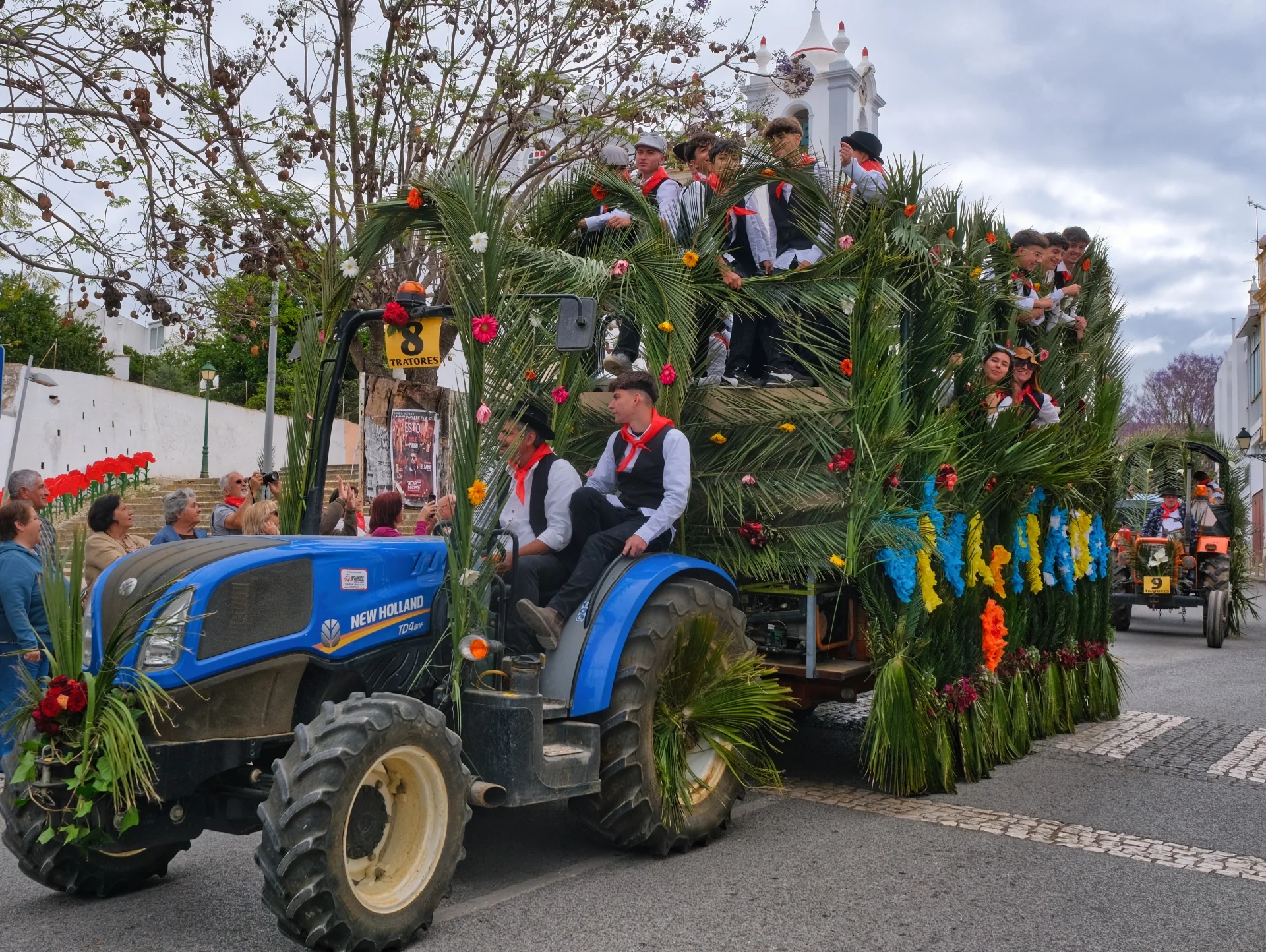
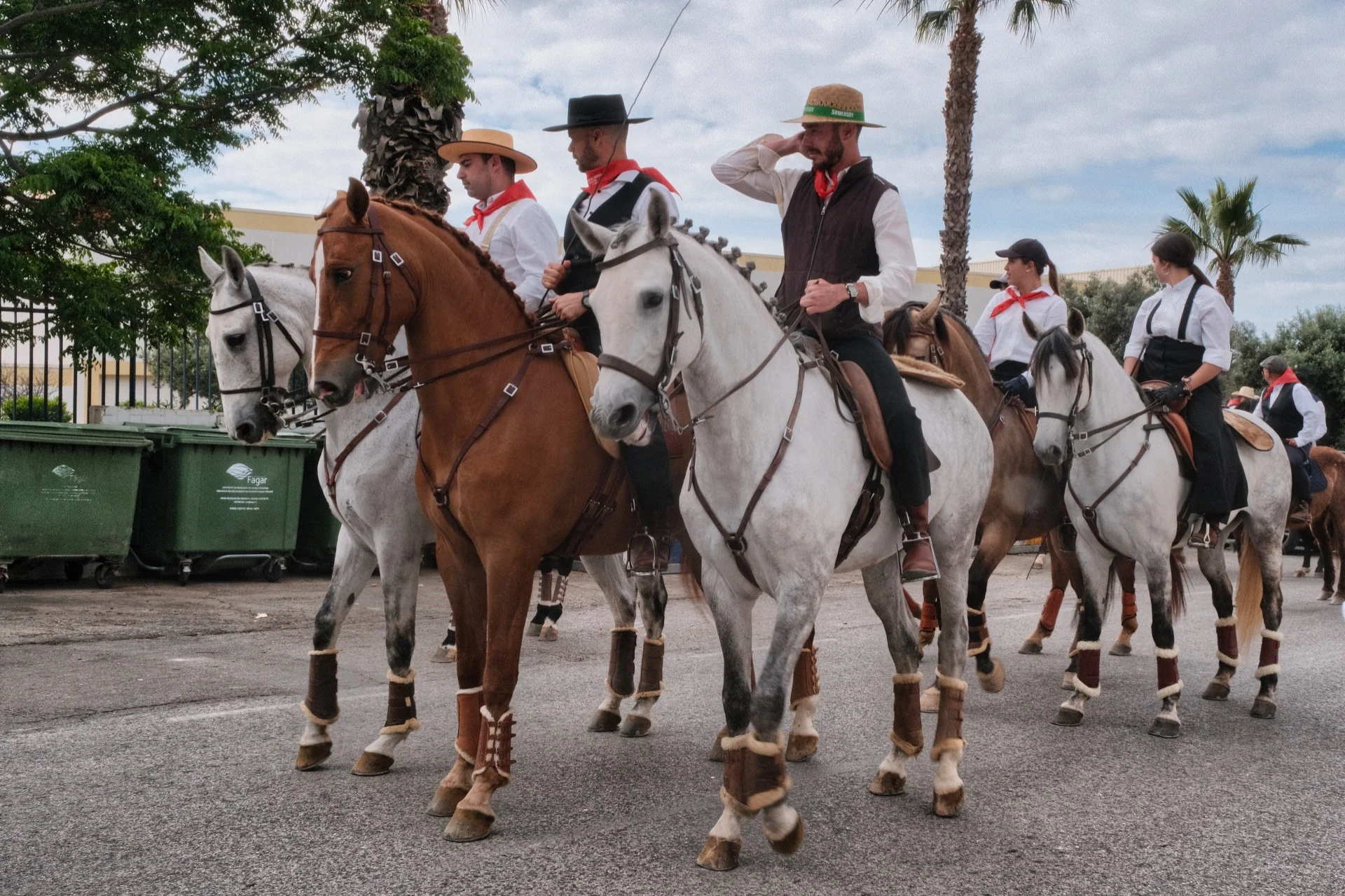
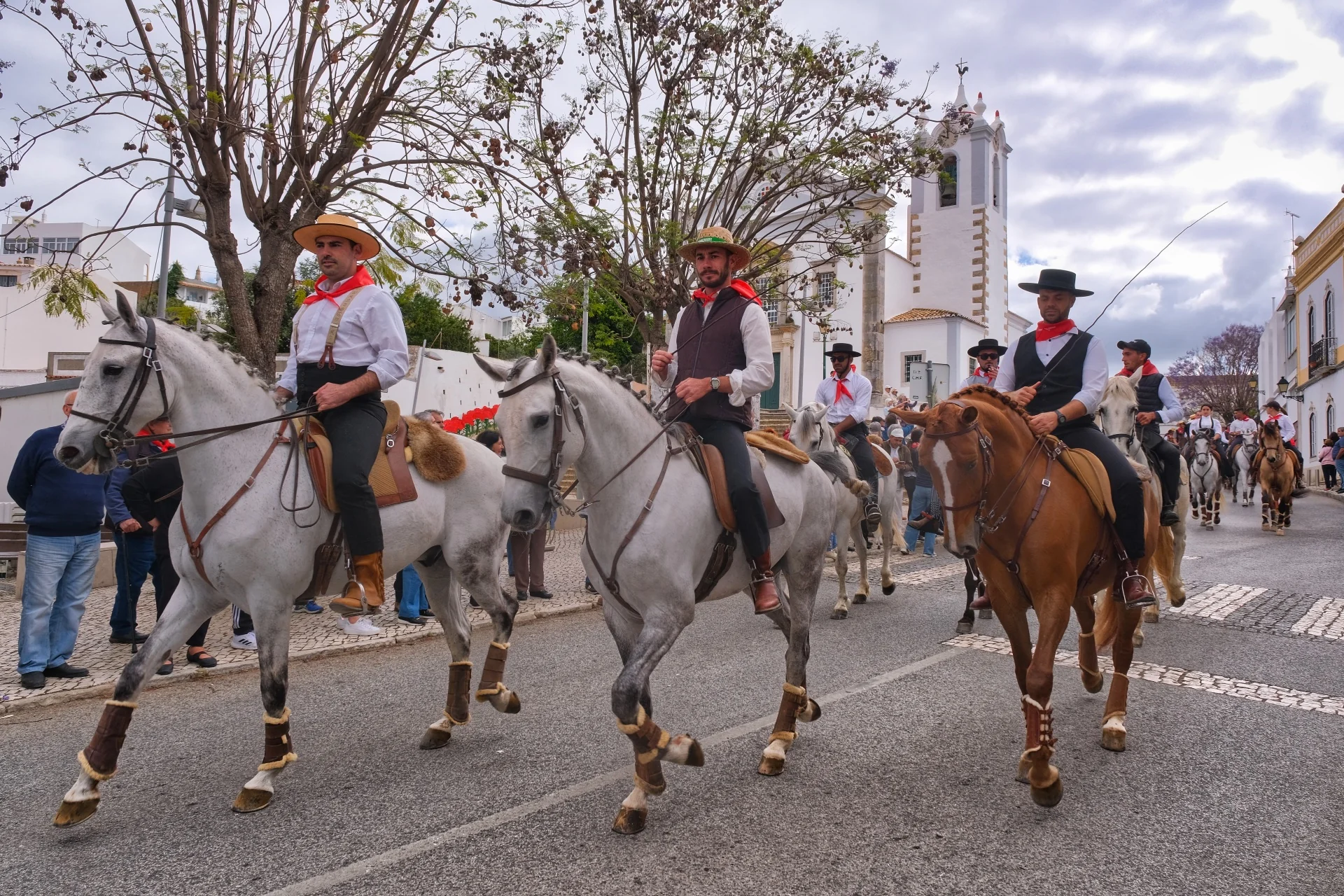
The pilgrims gather in Estoi, and after a blessing from the parish priest, the decorated carts and tractors set off for the Pinhal do Ludo, where everyone picnics. Ludo belongs to the neighbouring parish of Almancil, so the procession leaves Estoi’s own ground and heads down towards the coast. People make the trip on horseback, in animal-drawn carts, or on tractors with trailers, everything decked in leaves, flowers and verses written in praise of the Pinha.
atrelado de trator vira na festa da pinha e provoca 10 feridos +2
The picnic is where the legend and the present day meet. According to the old account, the muleteers used to hold a big lunch at Ludo in the shade of the pine trees once their business was settled. Today’s picnickers are eating, quite literally, in their footsteps.
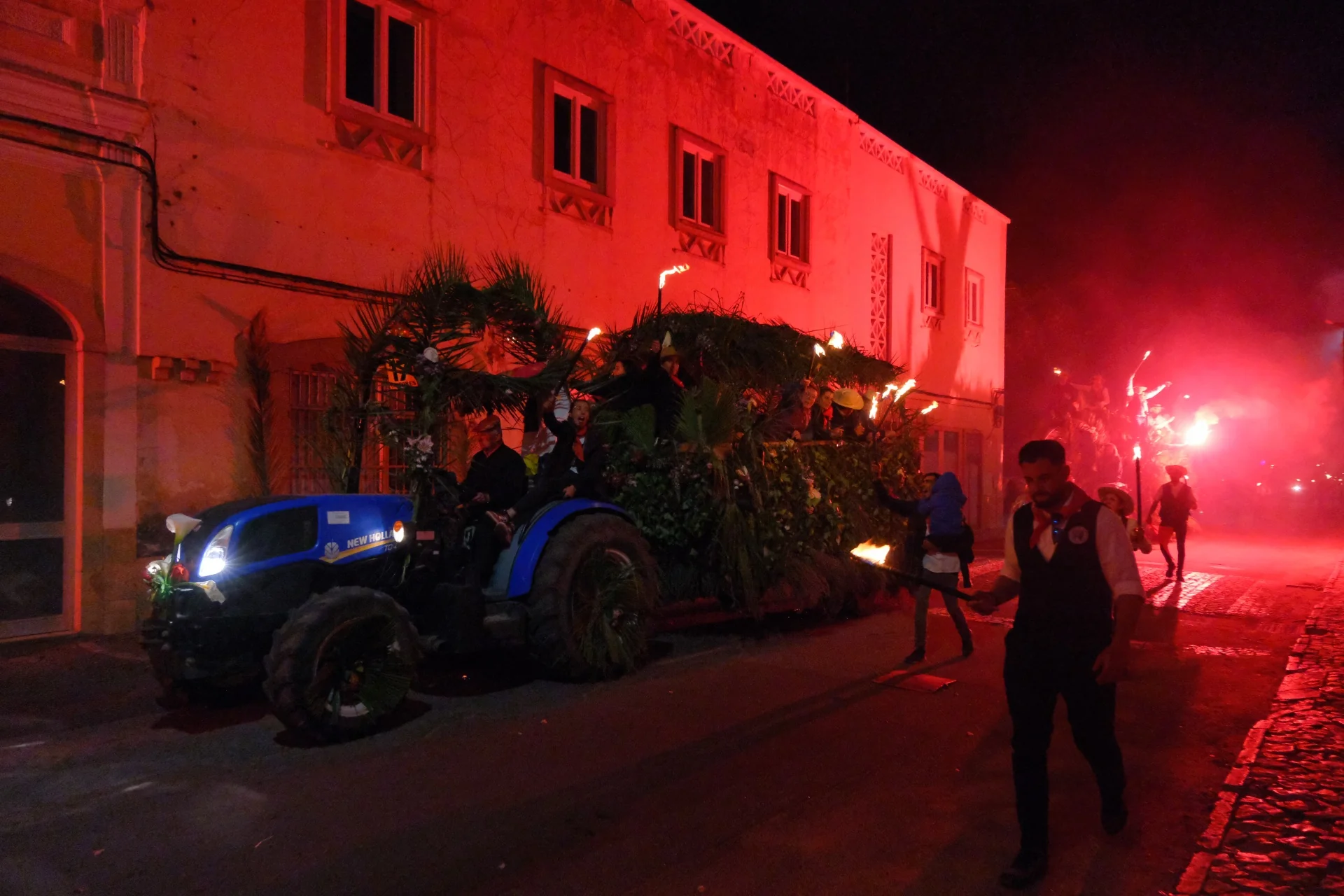
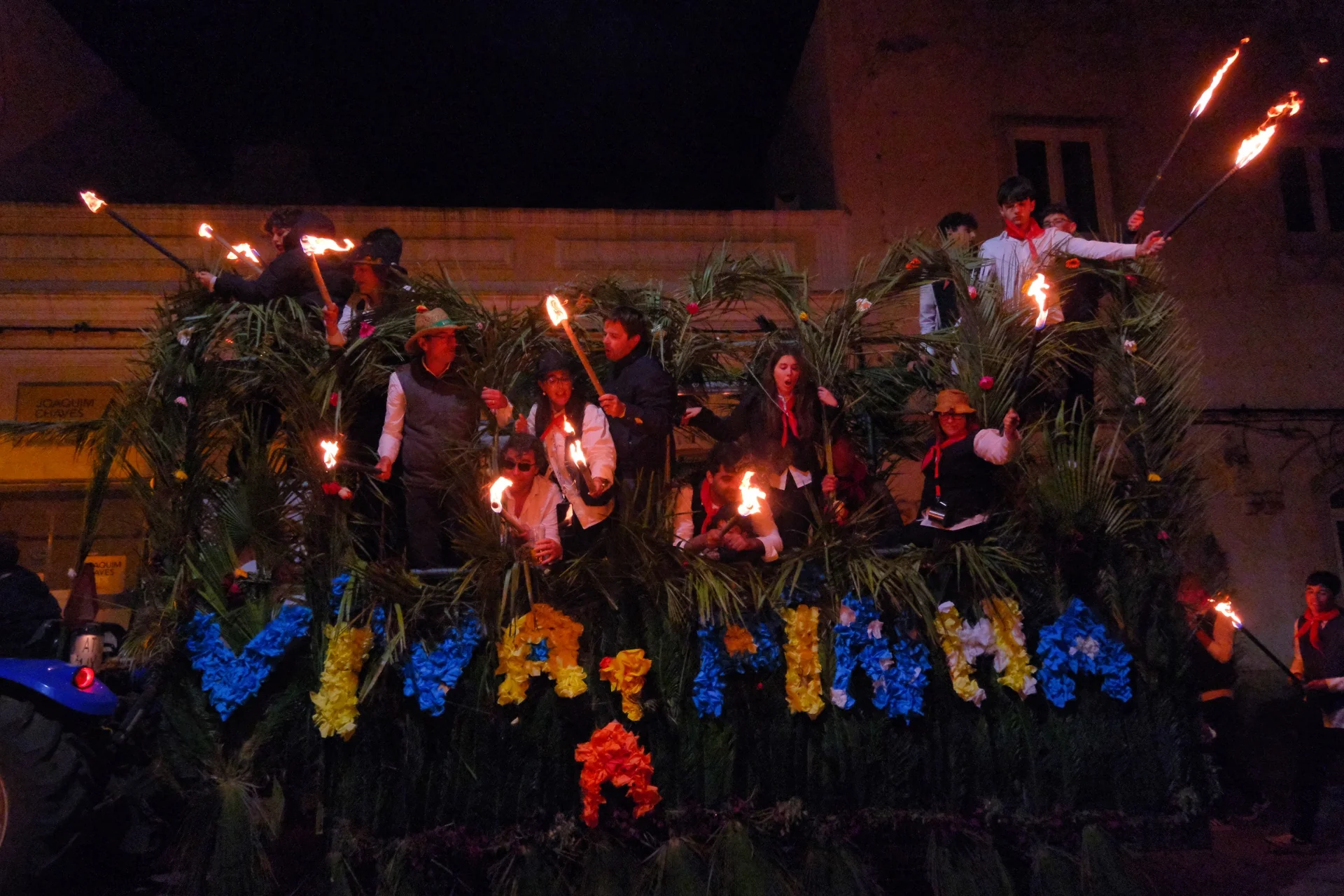
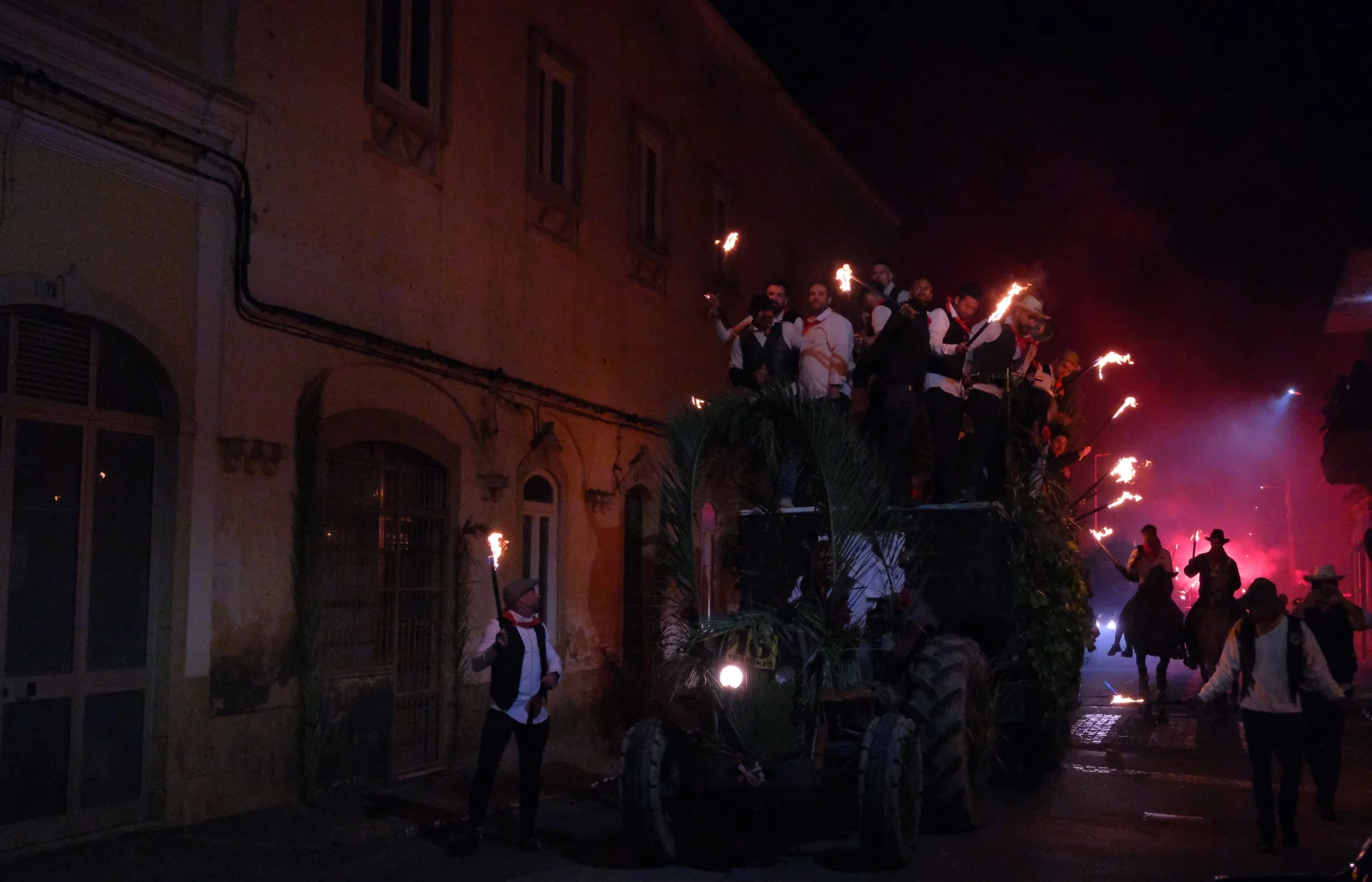
Then comes the part everyone talks about. The old story describes a joyful return to the village by torchlight, with cheers for Our Lady and an enormous fire lit in front of the church. The torches haven’t gone away. They are still part of the tradition, alongside the feasting, the drinking and the fireworks. One local description sums it up as an exuberant parade of joy, light and colour, with cheers for the Pinha, the muleteers and Our Lady of Pé da Cruz.
The people who take part seem to agree that this is the heart of it. In a 2011 survey for a Master’s dissertation on the festival, 59% of the women who answered named the parade as the thing they liked best. It’s a nice detail: for a festival with such deep roots, people love it most for what happens in front of them.
The people who keep it going
The Festa da Pinha is still alive because a village decided it should be. It has been described as intangible cultural heritage of great value, above all to the people of Estoi, who keep the tradition alive with fervour. Local groups such as the Casa do Povo de Estoi and the Confest, the Estoi Equestrian Confraternity, help to organise events around it.
It has also caught the attention of researchers and storytellers. Laura Carlos wrote her Master’s dissertation on how the festival has changed over time, and later made a photography exhibition about it with Pedro Barros. The writer Luís Barriga retold its origins in a short story, “Era Uma Vez a Festa da Pinha,” published in an anthology of Algarve tales. A festival that inspires theses and short stories is clearly doing something right.
If you go
This isn’t a show put on for tourists, and that is exactly its appeal. Estoi is an easy trip from Faro, so you can stay in the city and spend the day in the village. A few suggestions:
Date: The festival is traditionally held on 2 May. Programmes and timings can change, so check local announcements closer to the day.
Pick your moment: The morning departure and the evening return are the two big scenes. If you can only see one, go for the torchlit return.
Mind your manners: For the village this is a family and devotional occasion first. Keep a respectful distance from the procession and never get between a horse and its path.
Keep your wits about you: Animals, tractors and crowds share the same roads. A 2015 accident, when a tractor trailer carrying pilgrims overturned and ten people were injured, is a sober reminder that this is real life, not choreography.
A festival that outlived its reasons
The muleteers have gone. The mountain crossings that once seemed to need a miracle are now a short drive. And yet each May the carts are decorated, the horses are led out and the village sets off for the pines again, as if the road were still long and the journey still uncertain.
Traditions survive when people keep finding a reason to do them together. In Estoi, the reasons are still easy to see: a picnic under the trees, verses on a cart, a line of torches in the dusk and a crowd cheering at the church door.