
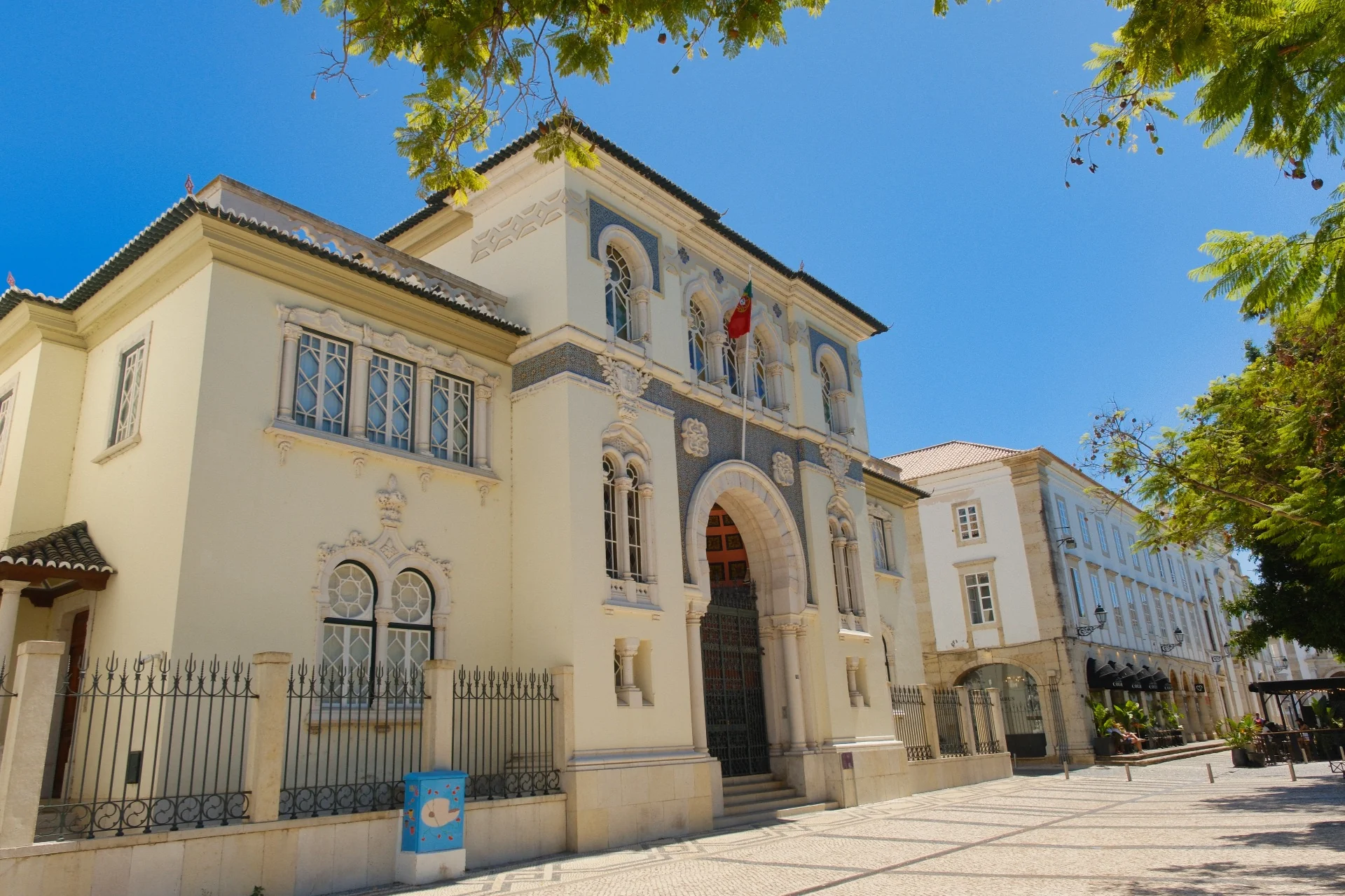
Anyone strolling through Manuel Bivar Garden in Faro will find it hard to miss one particular building that stands apart from everything around it. Lacy domes, richly decorated tiles, and a main door where Moorish influences meet Portuguese revivalist taste — this is the building housing Faro’s branch of the Bank of Portugal (Banco de Portugal), one of the city’s most recognisable architectural landmarks.
A project by architect Adães Bermudes
The building was erected in 1926, designed by architect Adães Bermudes, who was also responsible for several other Bank of Portugal branches around the country, including those in Bragança, Coimbra, and Évora. It sits on Praça D. Francisco Gomes, directly facing Faro’s marina and the city garden, on a site once occupied by the old vegetable market (Mercado das Hortaliças).
The requirement to open branches in every district capital dates back to a contract signed between the Bank of Portugal and the Portuguese State in 1887, under which the bank also took on the role of the State’s banker and general treasury office. Between 1889 and 1895, the first permanent branches were established in district capitals, and it was within this broader expansion that, decades later, the Faro building came to be built.
Neo-Manueline style with Islamic touches
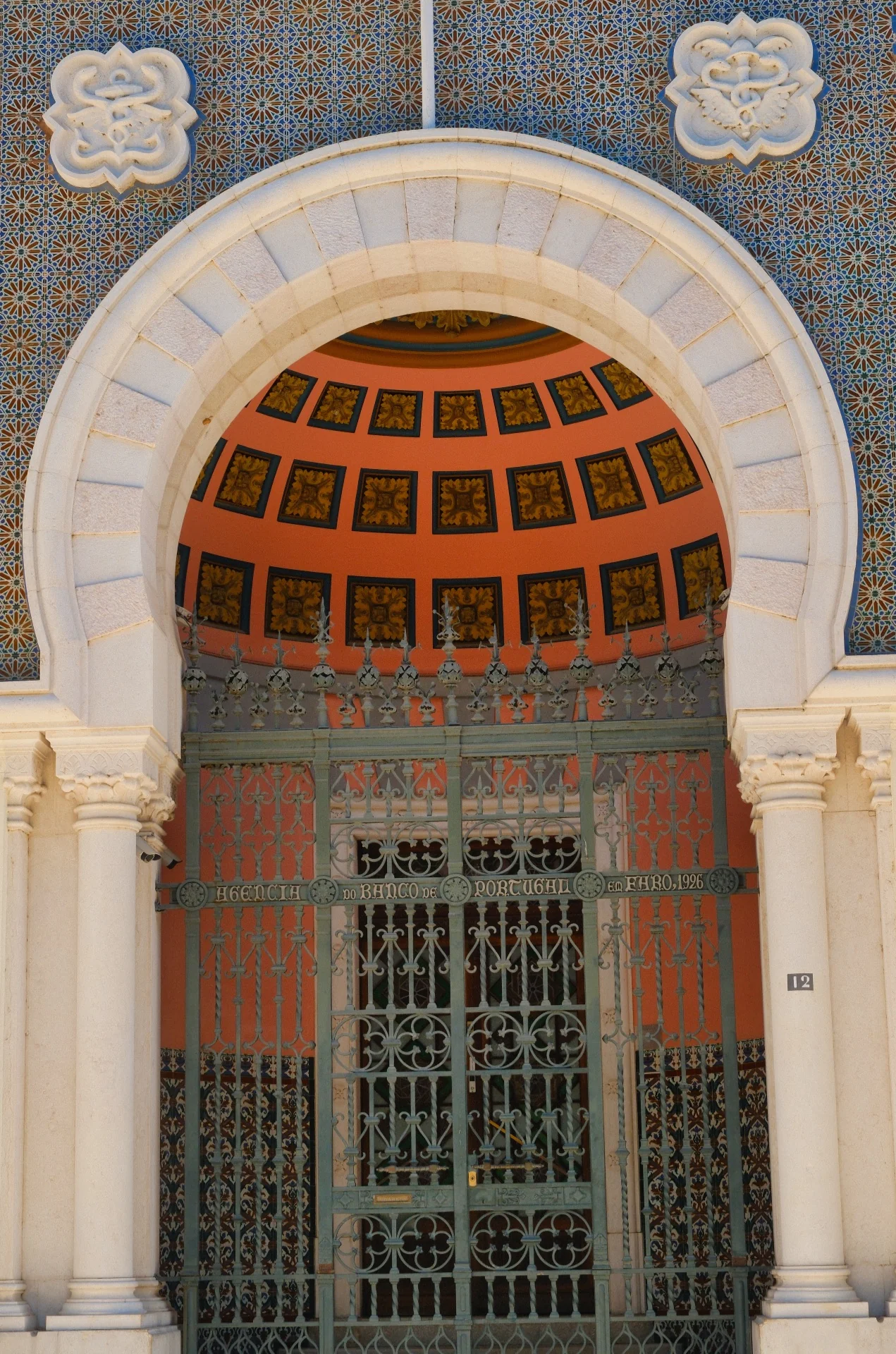
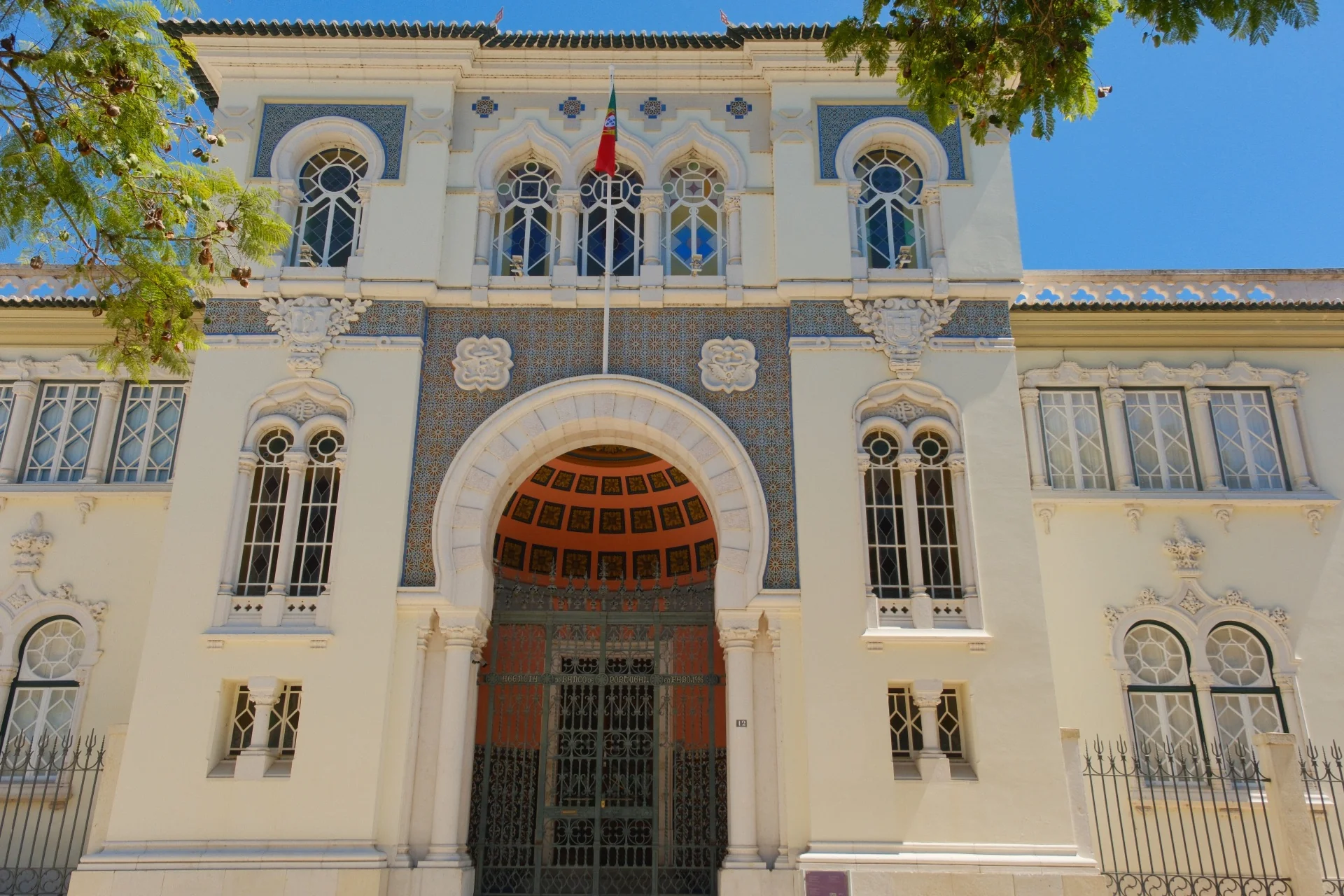
Architecturally, the building is classified as an example of Neo-Manueline revivalist architecture, with clear Islamic-inspired suggestions on the main door. The stone door and window surrounds and the chamfered battlements follow patterns drawn from the historical Manueline style, while the horseshoe arches and tile ornamentation lean toward a language closer to Islamic architecture.
This blend of references was no accident. In the early 20th century, several Portuguese public and banking buildings turned to this kind of revivalism to express a national identity through architecture, drawing inspiration both from the Age of Discoveries and from the country’s Moorish past — a combination especially fitting for the Algarve, a region with a strong Islamic heritage.
The main façade deserves particular attention: facing the garden and the marina, its lacy domes and tile panels form one of the most elaborate decorative ensembles in the whole city of Faro.
A “notable” building
The building is listed by Faro’s city council as a “notable building” (edificação notável), a designation given to properties of particular architectural or historical value to the city. It still houses the Faro branch of the Bank of Portugal today, keeping the function it was originally built for — something fairly rare among historic buildings from this period, many of which have changed use over time.
Location and how to visit
The building stands on Praça D. Francisco Gomes, commonly known simply as “the Garden,” right in the heart of Faro’s historic centre. It’s an almost unavoidable stop for anyone visiting the city, as it sits just a few minutes’ walk from other points of interest.
Faro Cathedral and the Cidade Velha, with its walls and cobbled streets, are a short walk away. The Faro Municipal Museum, housed in the former Convent of Nossa Senhora da Assunção, is another nearby stop, as is the waterfront area by the marina — a lovely spot for a late-afternoon walk overlooking the Ria Formosa.
Because it sits right by the city’s main garden, the Bank of Portugal building tends to be one of the first landmarks visitors notice when arriving in Faro from the train station or the town centre, almost serving as a visual gateway into the historic area.
Why it’s worth the stop
You don’t need to go inside — the building remains an active bank branch and isn’t open for regular tourist visits — to appreciate its value. Simply crossing the square and taking a close look at the façade is enough: the stonework details, the tiles, and the forms that come together here tell an important chapter of early 20th-century Portuguese architectural history all on their own.
For photography enthusiasts, late afternoon usually offers the best light on the main façade, with the sun falling more softly on the tiles and stonework, and the garden in the foreground rounding out the shot.
Faro is often seen mainly as a gateway to the Algarve’s beaches, but buildings like the Bank of Portugal are a reminder that the city has a historic centre with a strong identity of its own — one that deserves time and attention from anyone visiting.