
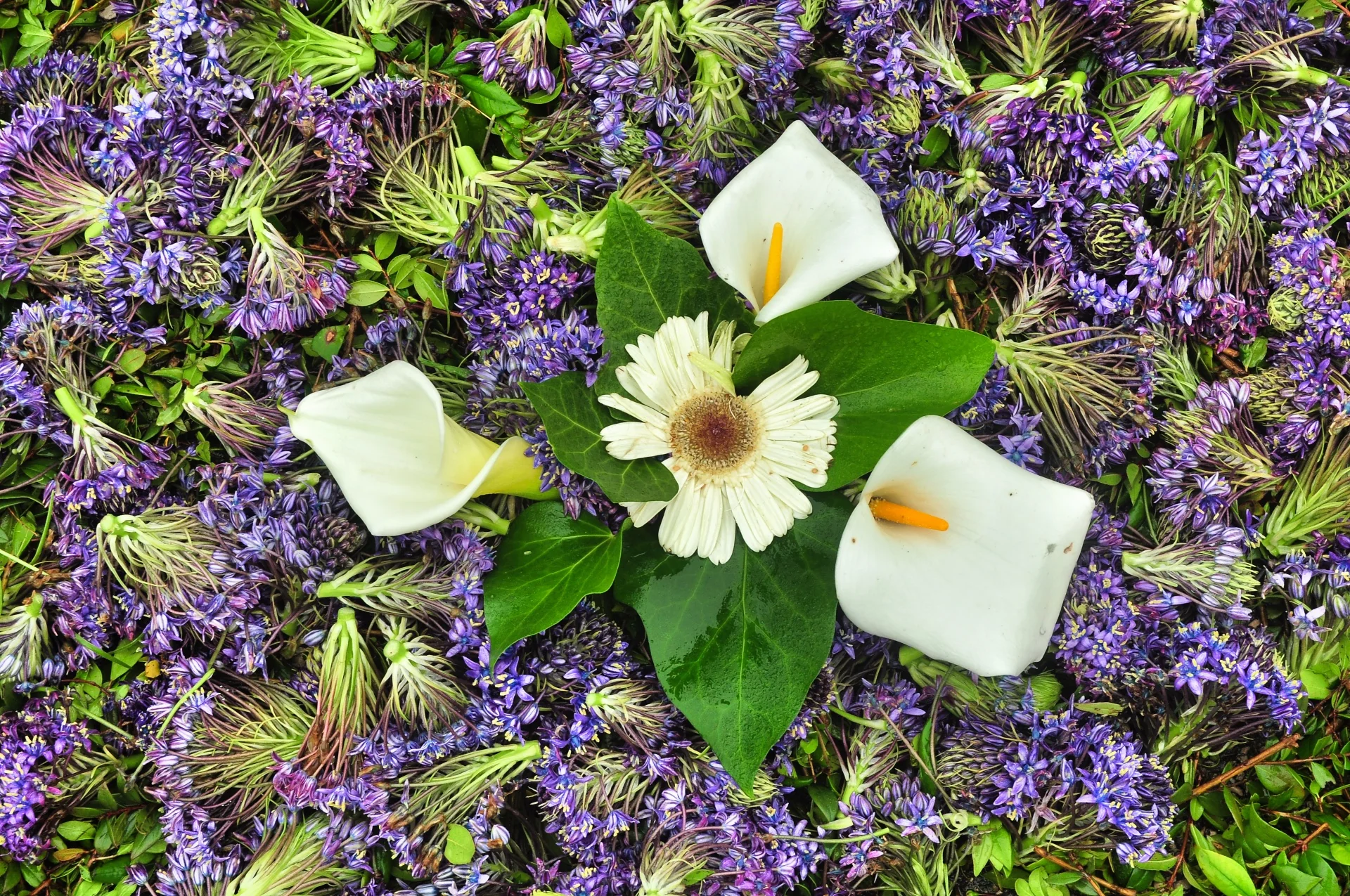
On Easter Sunday, São Brás de Alportel hosts the Festa das Tochas Floridas and becomes one of the most distinctive settings in the Algarve. Along more than a kilometre, the procession route is covered with carpets of natural flowers, and over them walk men carrying flower-decked torches and singing in unison.
A Tradition Centuries in the Making
The festival’s exact origin is disputed. According to tradition, in 1596 English troops led by the Earl of Essex invaded the Algarve, plundered and burned São Brás de Alportel and destroyed the parish church, until they were driven out by men armed with farm tools. One version credits the members of the Confraria do Nome de Jesus (Brotherhood of the Name of Jesus), who fought with staffs that were later symbolically turned into flowered torches. Another reading is purely religious: in the 19th century, almost every village held a Resurrection procession in which people carried a candle that was once called a “tocha”, or torch. Depending on the source, the festival dates back to the 16th or the 17th century.
Until 1910, every parish in the Algarve held a “Festa das Flores”. After the Republic was proclaimed, public manifestations were banned and the tradition of processions faded. In Lagos, for example, the first one only returned in 1941. São Brás had a particular bond with this celebration: in the early 20th century it was the largest rural parish in the country, with around 13,000 inhabitants, and one of the great Catholic centres of the Algarve. Even so, it was only in 1981 that the then parish priest, Father José Cunha Duarte, revived the festival, which has never stopped since. From the 1980s onwards, the parish also introduced a competition for the best flowered torches and decorated balconies.
How the Day Unfolds
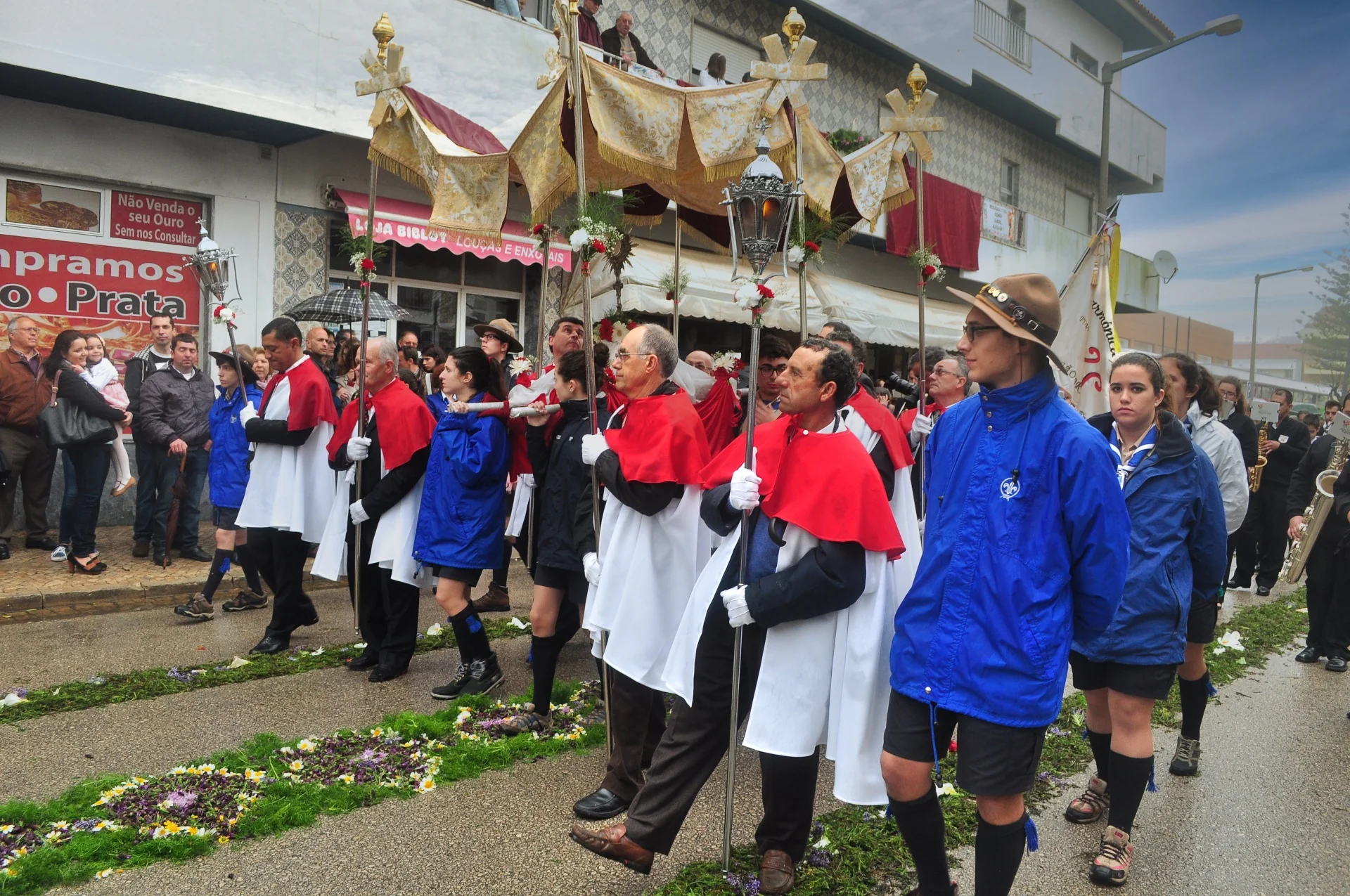
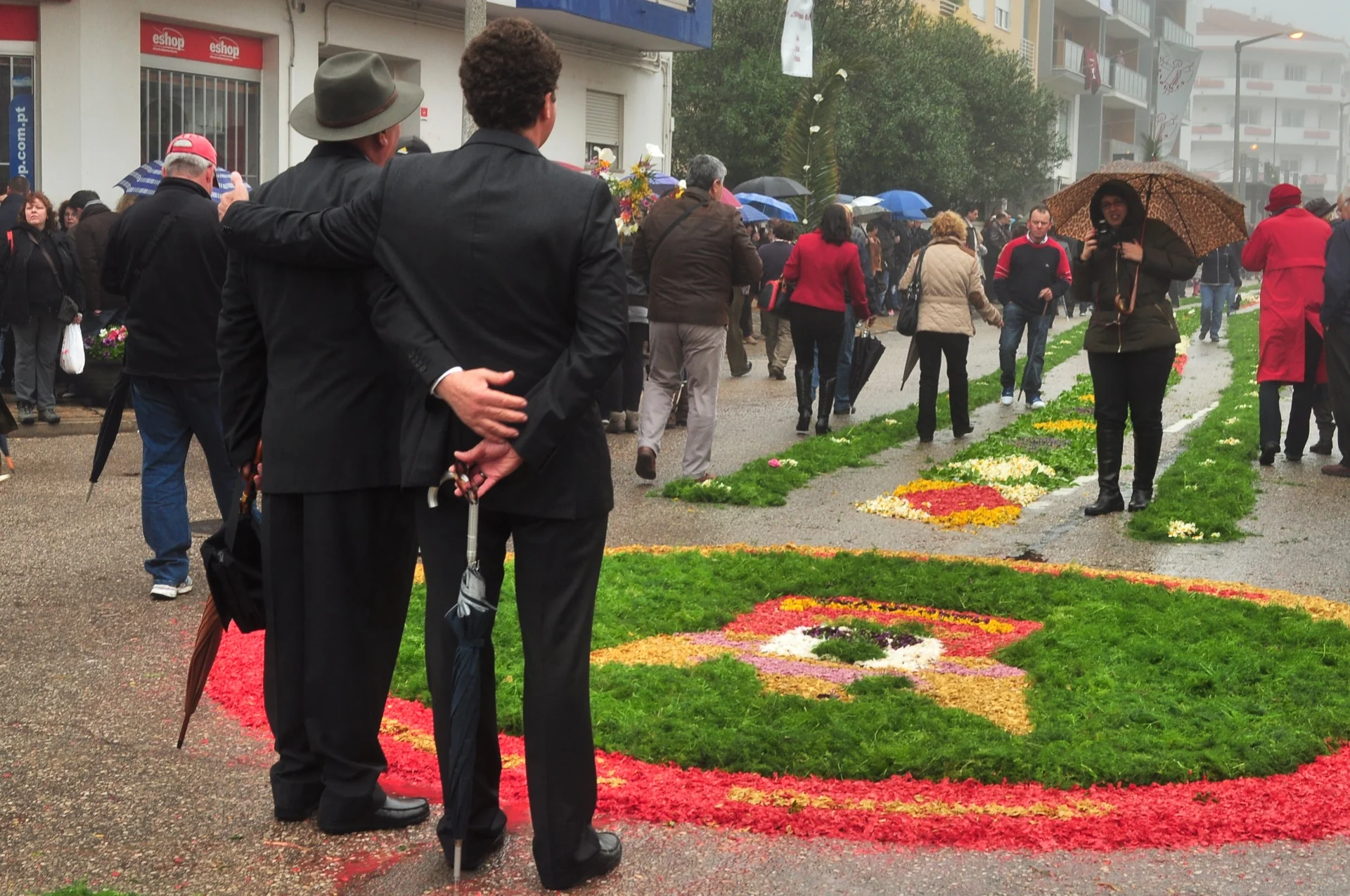
Throughout the week, locals gather and prepare the flowers, and in the early hours of Sunday hundreds of volunteers work through the night to lay the carpets. The result is a kilometre of designs and symbols, with the colours and scents of fennel, rosemary, lavender and wildflowers.
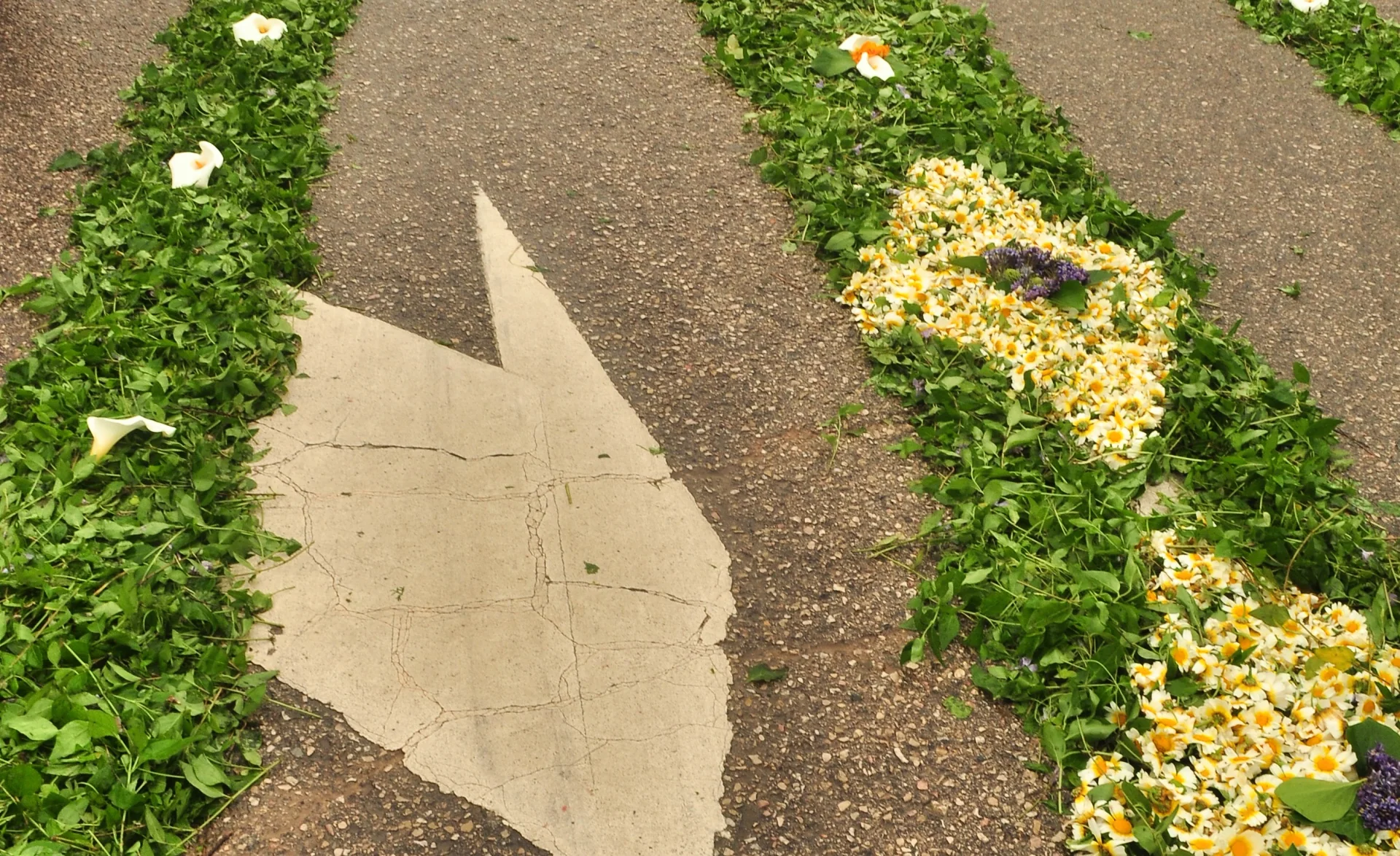
The streets open to the public at 9:30, so visitors can admire the work, and balconies are dressed with bedspreads hung from windows and red and white flags. At 10:00 the Mass of the Resurrection is celebrated at the parish church, and at 11:00 the procession sets off. There are no processional floats: flowers take their place, on the torches and on the ground. The torches are carried only by men, formally dressed, who open a path through the crowd, singing the traditional refrain «Ressuscitou como disse! Aleluia!» (“He is risen, as he said! Alleluia!”).
In Largo de São Sebastião there is a showcase of local producers, where you can taste the village’s famous tender almond sweets, the amêndoas tenras de São Brás. From 15:30, the churchyard hosts sweets and snacks, the prize-giving for the Jogos Florais (a floral poetry contest) and the torch competition, plus music and dance, with Mónica Sintra on the 2026 bill.
The Festival Today
Thousands of people arrive in São Brás on the day, including many natives of the village who return to meet family and friends. The organisation is shared between the parish, the Associação Cultural Sambrasense and the town council, with support from the Scout group Agrupamento 1330 and local associations. Since 2019, the municipality has reserved space along the route and parking for people with reduced mobility, under the “São Brás Acessível para Todos” (São Brás Accessible to All) project.
Official recognition has followed: in September 2025, the inscription of the Procissão da Aleluia in the National Inventory of Intangible Cultural Heritage was approved. It is a fitting distinction for a tradition the community brought back to life and still depends on, since everyone is invited to help gather flowers and prepare the carpets.
Visiting Tips
Entry is free. It is best to arrive early, before 11:00, to see the carpets still intact and to find a good spot along the route. São Brás is about 20 minutes by car from Faro, and the town council confirms the programme a few days before the festival.